A-Frame Gingerbread House Template
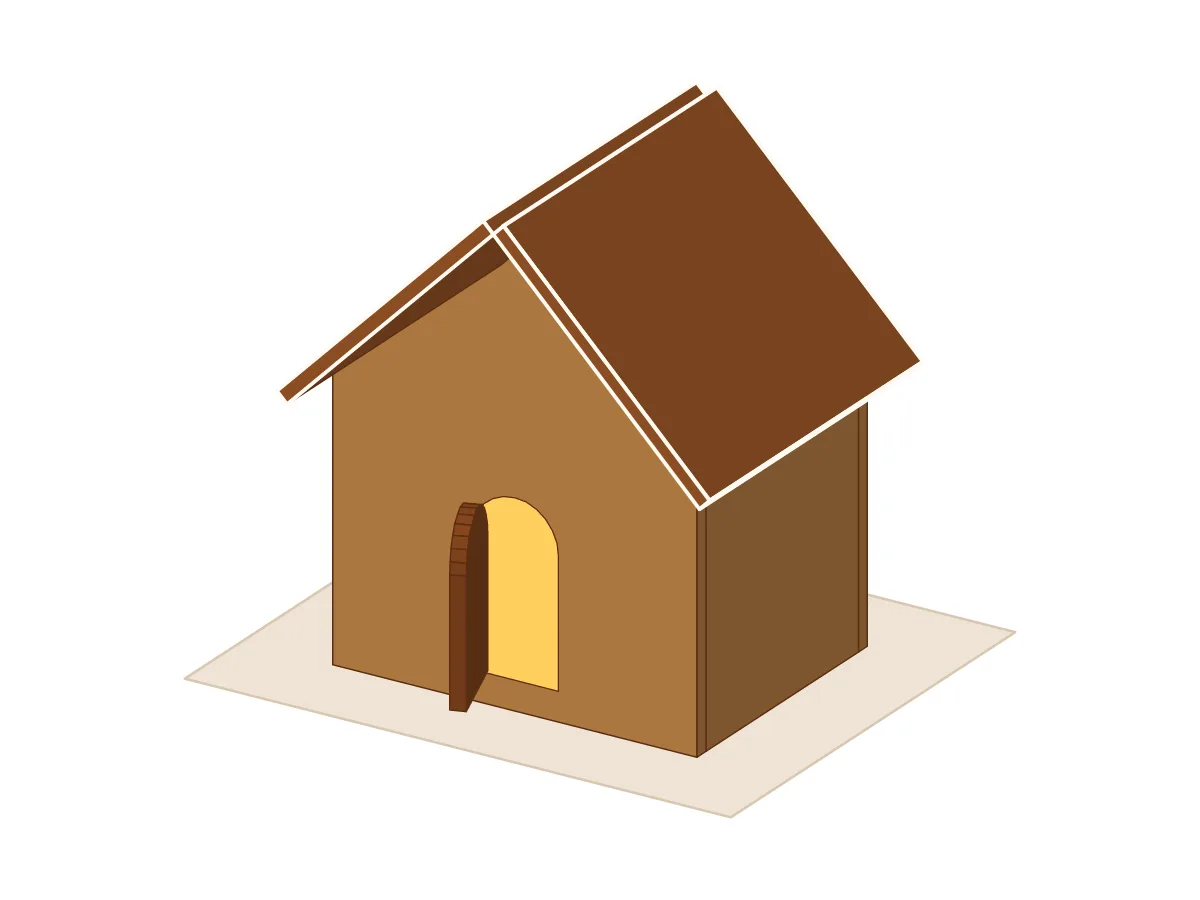
Print an A-frame gingerbread house in any size: two triangles and two panels that are the roof and the walls at once. Every piece is measured and cut for the thickness of your dough.
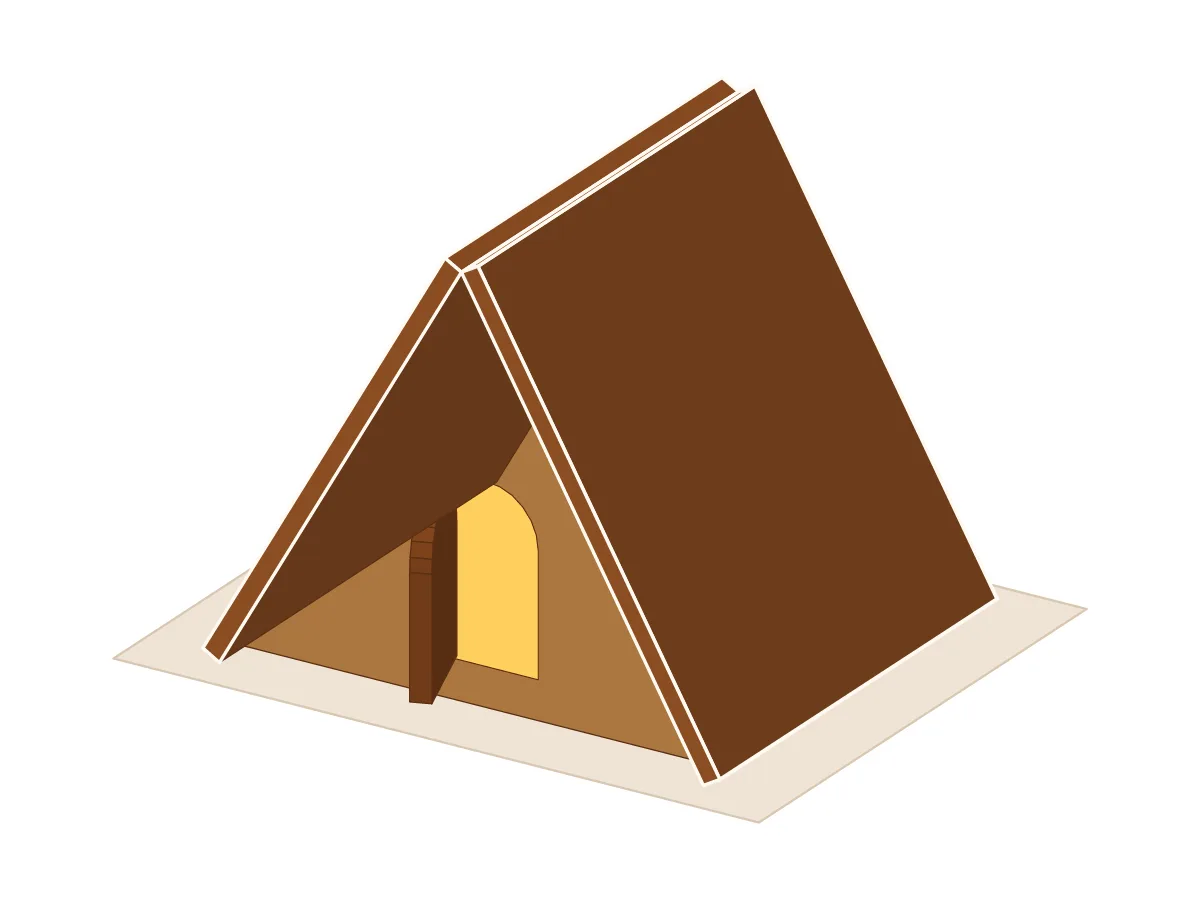
Assembled a-frame, 6 × 4.5 inches
Print at 100% (Actual size). The check line should measure exactly 2 in5 cm.
Customize size
A-frame pieces and measurements
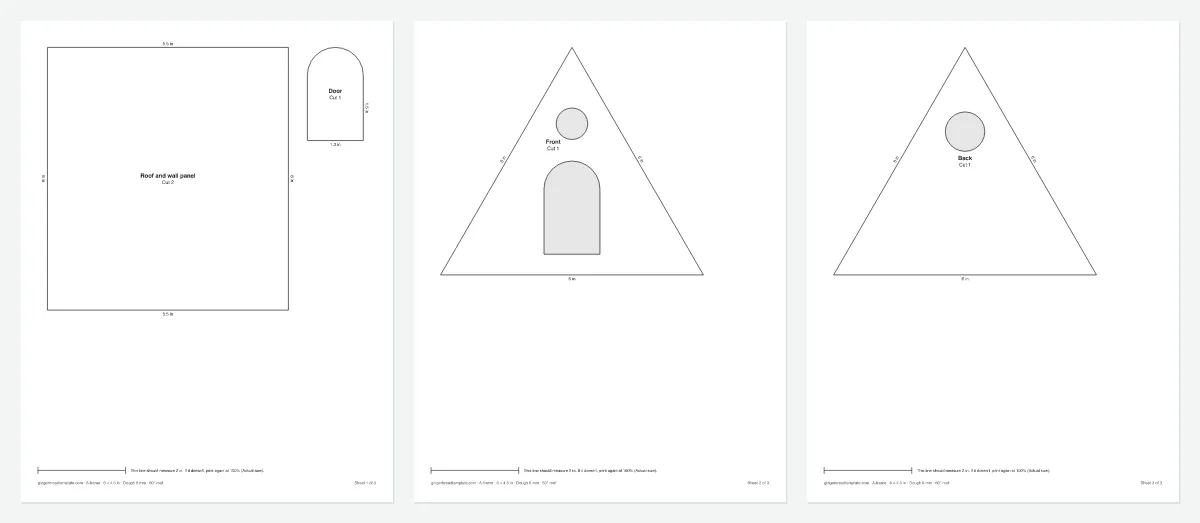
The default A-frame is 6 in15.2 cm wide at the base and 4.5 in11.4 cm from front to back, with a 60° roof that peaks 5.2 in13.2 cm above the board. That takes four patterns: the front and back triangles, the door and one roof panel you cut twice. It needs about 1.3 lb (580 g)580 g (1.3 lb) of dough.
| Piece | Cut | Pattern size |
|---|---|---|
| Front | 1 | 6 × 5.2 in15.2 × 13.2 cm |
| Back | 1 | 6 × 5.2 in15.2 × 13.2 cm |
| Door | 1 | 1.3 × 2.1 in3.2 × 5.4 cm |
| Roof and wall panel | 2 | 5.5 × 6 in14 × 15.2 cm |
| 5 pieces to cut from 4 patterns on 3 Letter sheets. | ||
- Dough
- You'll need about 1.3 lb (580 g)580 g (1.3 lb) of dough
- Board
- At least 8 × 6.5 in20.3 × 16.5 cm
Each panel runs from the ridge down to the board. Its slope is half the width divided by the cosine of the pitch, 6 in15.2 cm for this house, and it reaches 0.5 in1.3 cm past the triangles at the front and the back. There is no overhang at the bottom: the panels stand on the board.
How to use the A-frame template
The pitch shapes the whole house. At 45° the A-frame is a low tent; at the default 60° it looks like the letter A; at 70° it is tall and narrow, with long panels. The triangles get taller and the panels longer as the pitch goes up, so check the sheet count in the preview before you print.
- Pick the width, depth and pitch, and set the dough thickness you will roll.
- Print at 100% and check that the line on each sheet measures 2 inches (5 cm on A4).
- Cut out the patterns. Cut both panels from the same sheet of rolled dough, so they come out the same thickness.
- Cut around the patterns and lift the extra dough away rather than moving the pieces, so they keep their shape.
How to assemble an A-frame gingerbread house
An A-frame goes together faster than a house with walls: there are no side walls to line up, and once both panels lean together they hold each other.
- Print the template at 100% (Actual size) and check that the line on each sheet measures exactly 2 in. Cut out the paper pieces.
- Roll the dough on parchment to 6 mm (about 1/4 in). Lay the patterns on it, cut around them and pull the extra dough away rather than moving the pieces, so they keep their shape.
- Cut out the windows and the door. Chill the cut pieces on the baking sheet before baking so they spread less.
- Bake until the pieces are firm. While they are still warm, lay each pattern back on top and trim the edges with a sharp knife. Let the pieces cool completely on a flat surface.
- Make royal icing with meringue powder or pasteurized egg whites and beat it to stiff peaks. Frosting is too soft to hold up walls.
- Stand the front and back triangles on the board, 4.5 in apart from outside to outside, and prop them with cans or jars.
- Pipe icing along the sloped edges of both triangles. Lean the first roof panel on them so its bottom edge rests on the board, and hold or prop it until the icing grabs.
- Add the second panel the same way. The panels reach 0.5 in past the triangles at the front and back. Fill the V-shaped gap along the ridge with icing.
- Ice the door to one side of the opening so it stands slightly open.
- Let the house dry for a few hours or overnight before you decorate.
What you'll need
- Rolling pin with thickness rings on Amazon (opens in a new tab)The rings roll the dough to the same thickness everywhere, which is the thickness the template is cut for.See on Amazon
- Meringue powder on Amazon (opens in a new tab)For royal icing without raw egg whites.See on Amazon
- Piping bags and tips on Amazon (opens in a new tab)A small round tip draws the glue lines along the walls and the icing on the roof.See on Amazon
- Cake board on Amazon (opens in a new tab)A firm base about 2 inches bigger than the house each way, so you can move it when it is done.See on Amazon
- Gingerbread cookie cutters on Amazon (opens in a new tab)Trees, people and stars from the leftover dough, to stand around the house.See on Amazon
- Gingerbread house kit on Amazon (opens in a new tab)Pre-baked walls and roof, if you would rather skip the baking this year.See on Amazon
gingerbreadtemplate.com is a participant in the Amazon Services LLC Associates Program, an affiliate advertising program designed to provide a means for sites to earn advertising fees by advertising and linking to Amazon.com.
A roof that is also the walls
In a classic house the roof sits on four walls. Here the two panels lean on the sloped edges of the triangles and stand on the board, so they carry the house and keep the weather out at the same time. That changes a few things when you build.
- The feet of the panels want to slide outward. Pipe a line of icing on the board where each panel stands, and prop the panel from outside with a can or a jar until the icing holds.
- The steeper the pitch, the less the panels push sideways at the feet. If your first A-frame keeps spreading, try a steeper roof.
- The panels meet at their bottom edges along the ridge, which leaves a small V-shaped groove on top. Fill it with icing; it hides the joint and holds the panels together.
Decorating an A-frame
Since the roof is the walls, the windows go in the triangles: a round one above the door in front, and with Windows set to Lots, two more in the back. The panels are big, plain surfaces for candy shingles or rows of piped icing.
For windows that glow, fill each opening with about a teaspoon of crushed hard candy after baking and return the pieces to the oven for 2 to 3 minutes, until the candy melts. Let them cool on the baking sheet before you move them.
FAQ
What roof pitch is best for an A-frame gingerbread house?
The template starts at 60°, which gives the classic A shape. You can choose anything from 45° to 70° under Customize size. A steeper roof makes a taller house with longer panels; a shallower one makes a wider, lower tent.
Why does the A-frame have no side walls?
The two roof panels come all the way down to the board, so they do the job of the side walls. That is what makes it an A-frame, and it is why the house has only four patterns.
How do I keep the panels from sliding apart?
Ice the bottom edge of each panel to the board as well as to the triangles, and prop the panels from the outside with cans or jars until the icing sets. Give the first panel time to set, an hour if you can, before you add the second.
How big can an A-frame template be?
Up to 20 inches wide. Panels larger than a sheet of paper are split into parts with overlap strips and alignment marks, so you can tape the pattern together before cutting.
More gingerbread house templates
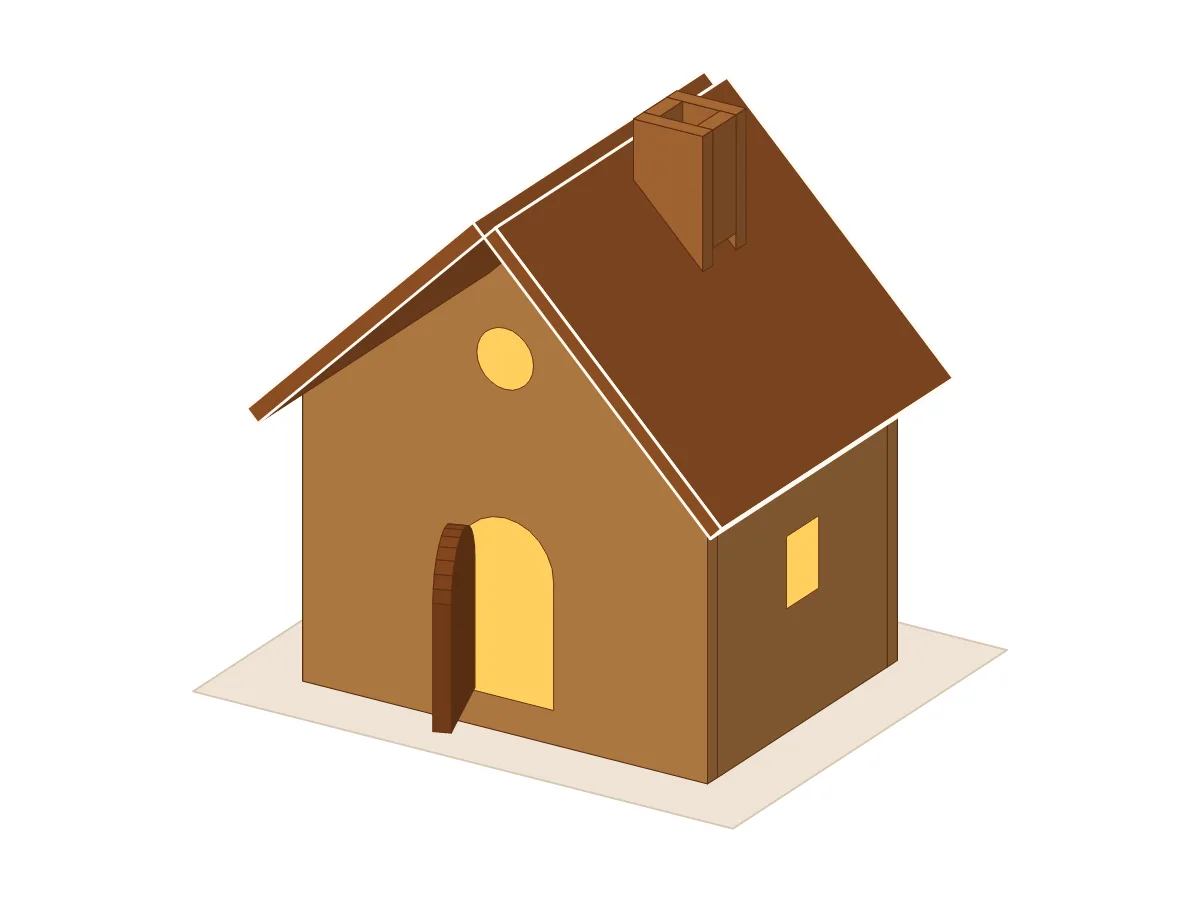 Gingerbread house templateThe classic house with a pitched roof, a door and a chimney. Any size.
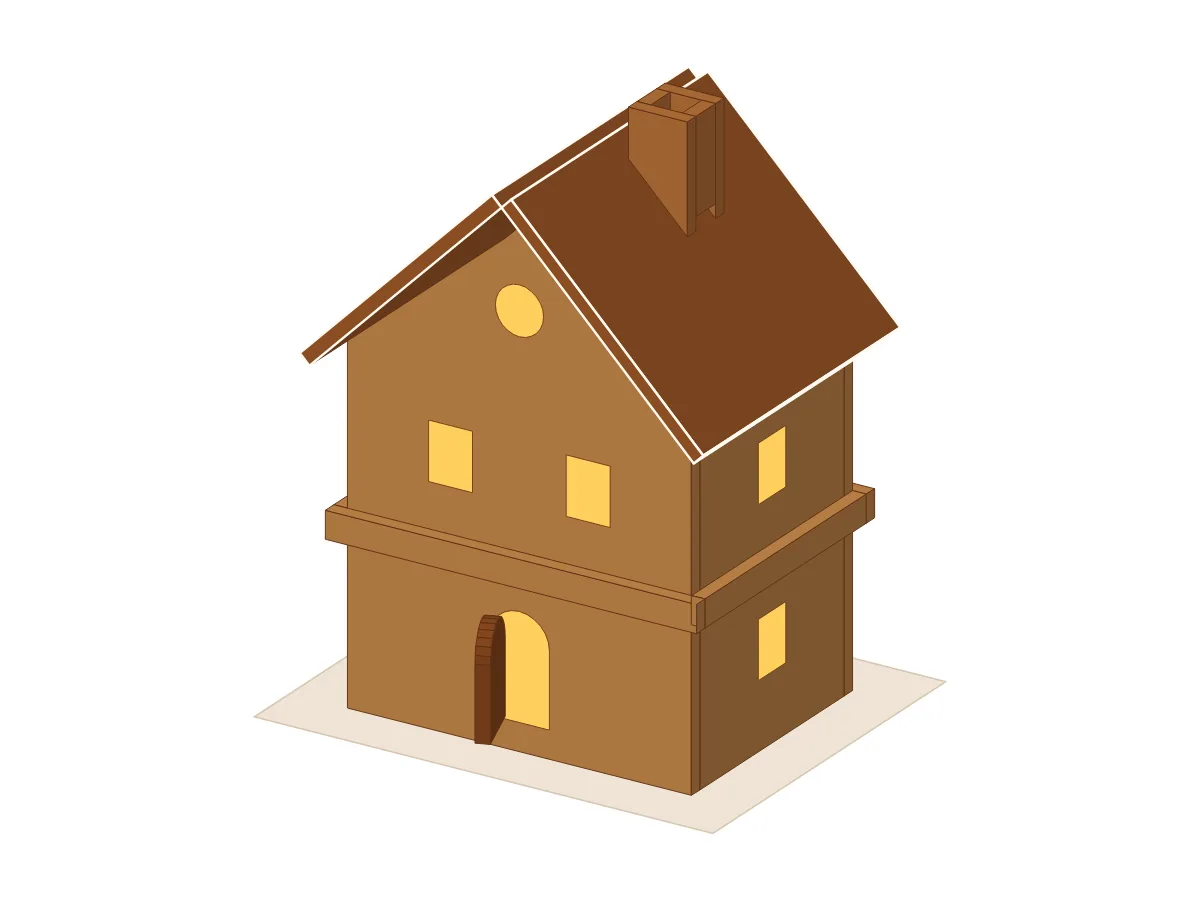 Two-story gingerbread houseTall walls, two rows of windows and a band between the floors.
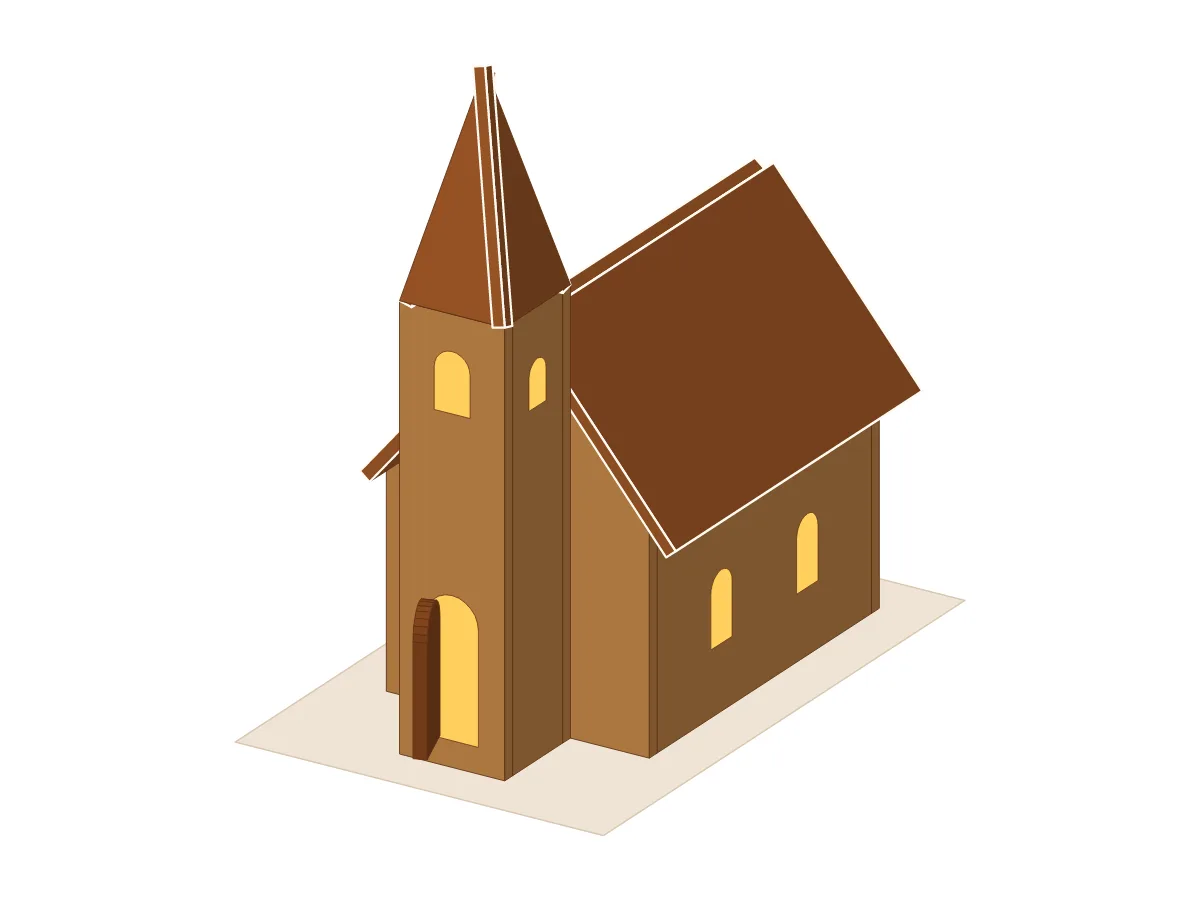 Gingerbread churchA long nave, a square tower in front and a four-sided spire.
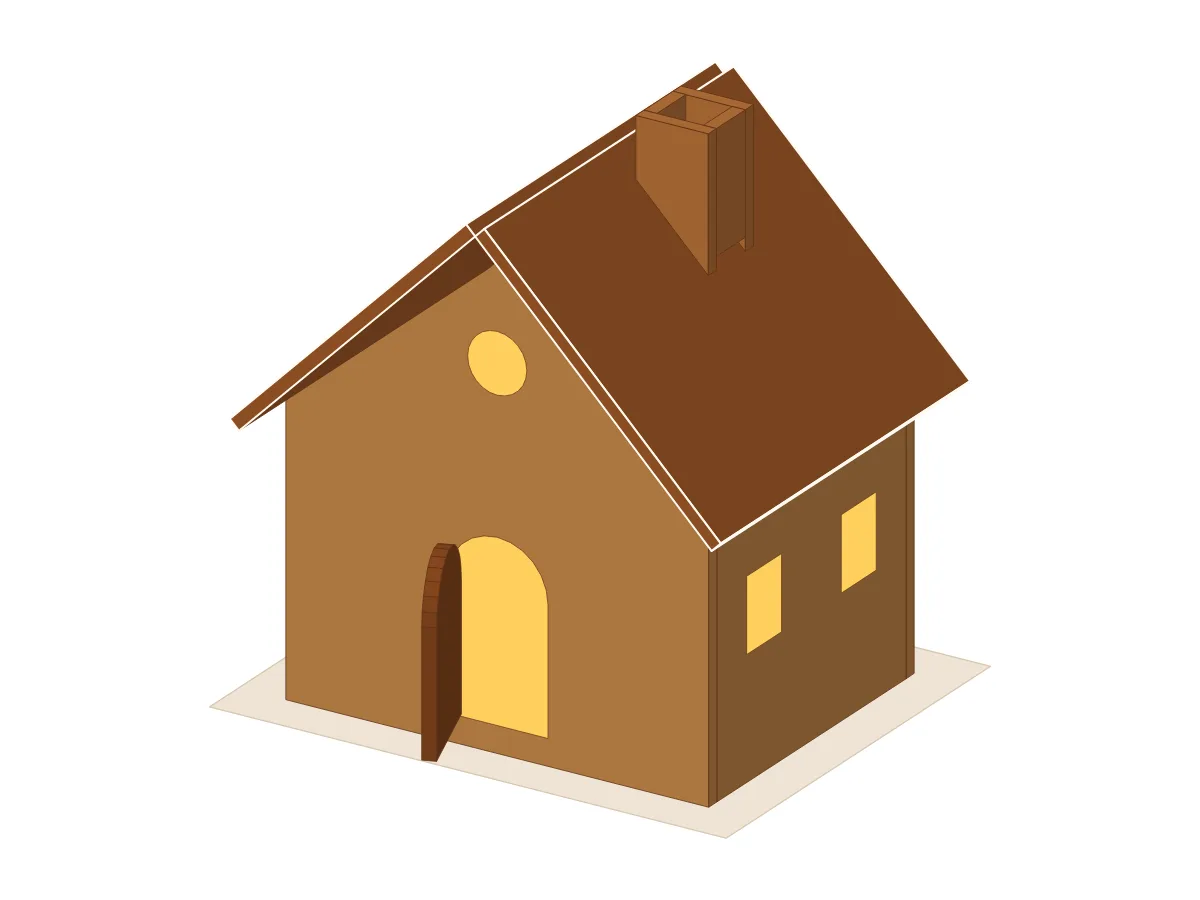 Large gingerbread houseA 9-inch house with thicker dough and an inner brace for the roof.
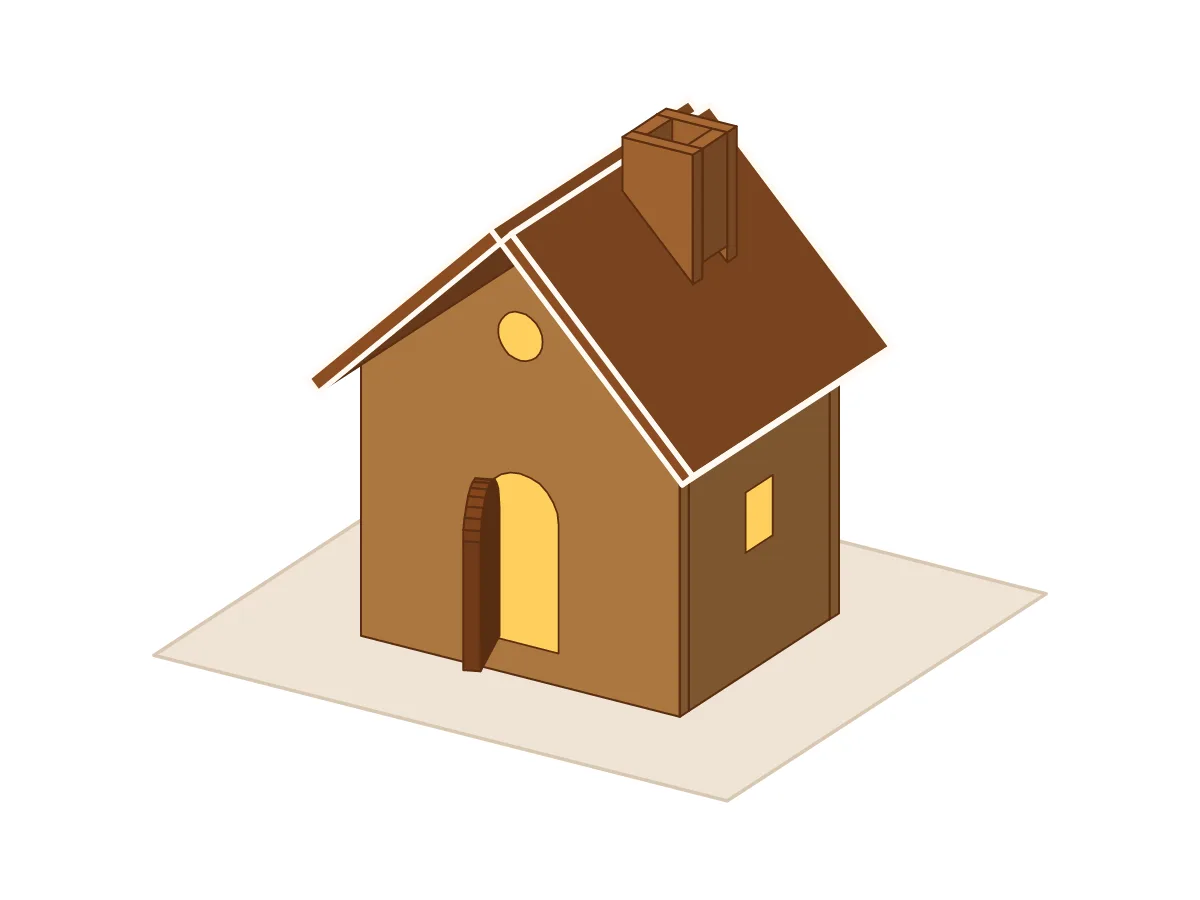 Mini gingerbread houseA 2.5-inch house, with an option to make it a mug topper.
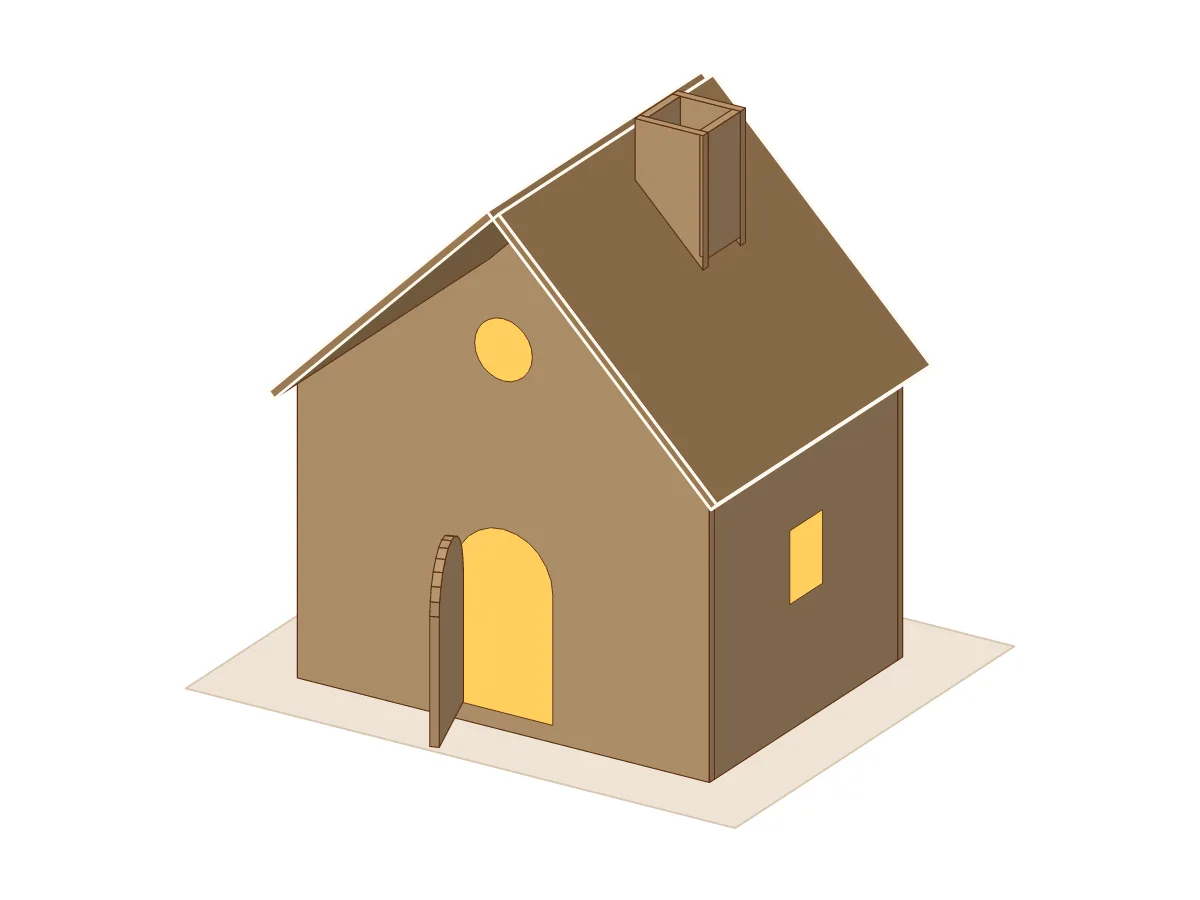 Cardboard gingerbread houseFor 3 mm cardboard, with a folded roof. Decor you can keep.
 Easy gingerbread houseA small house with five patterns to cut and no chimney.