Cardboard Gingerbread House Template
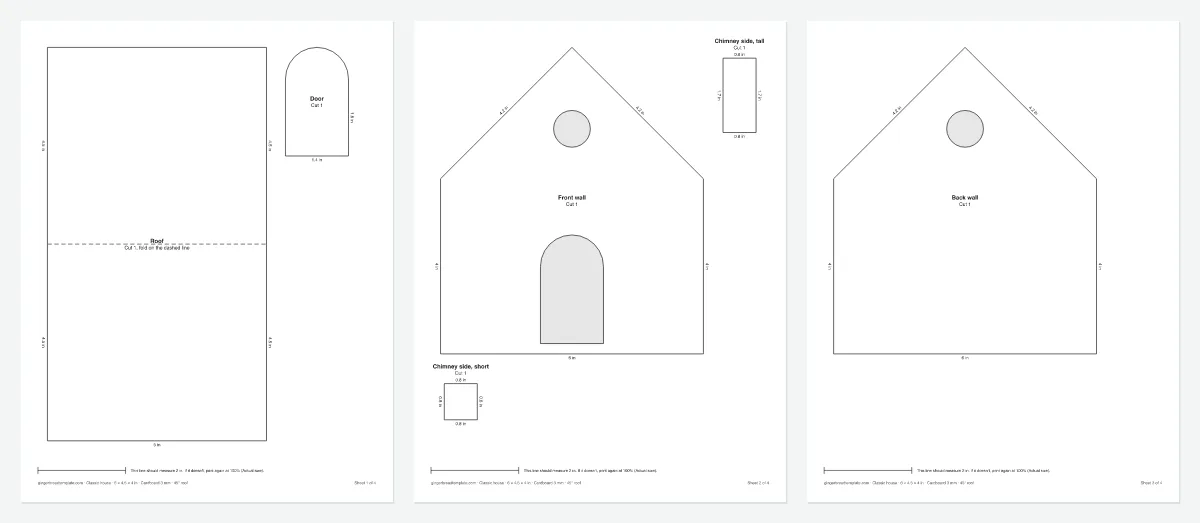
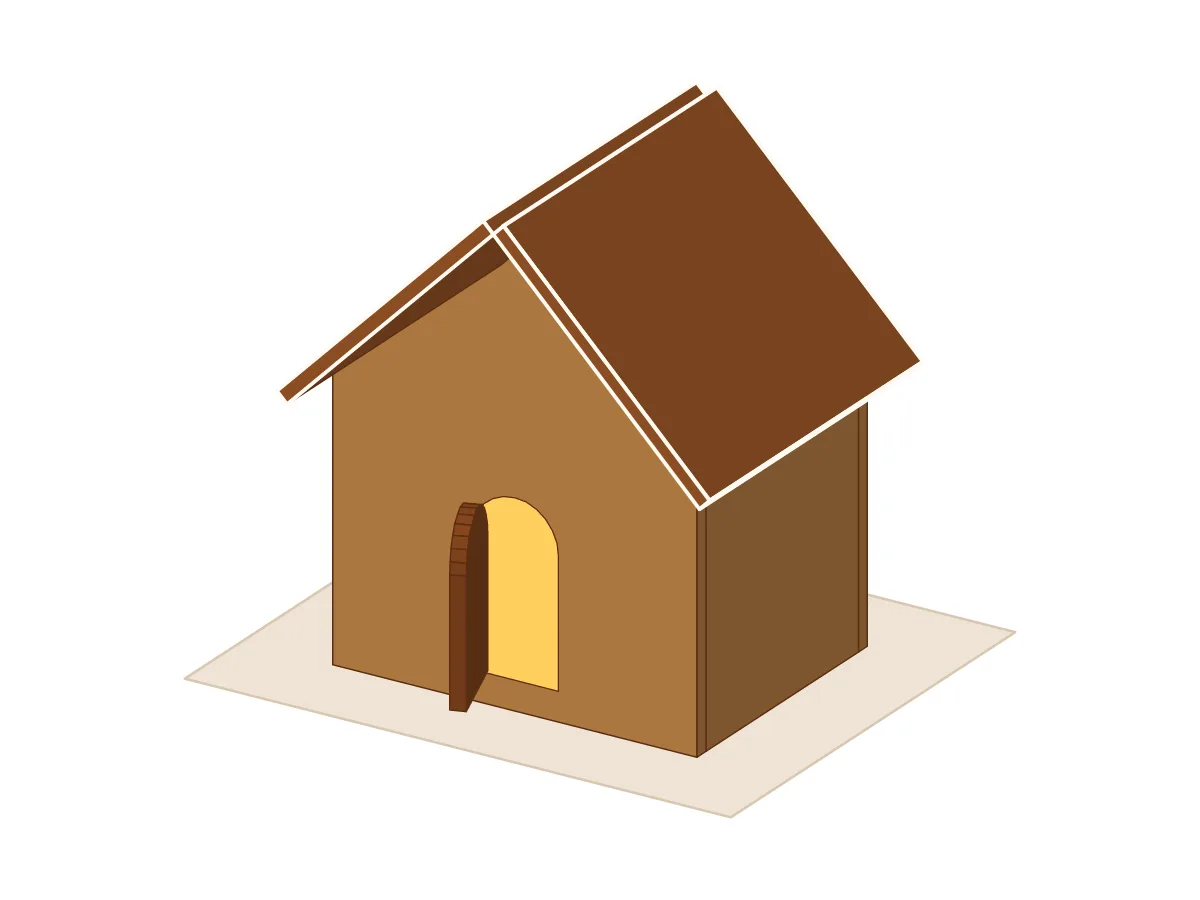
A gingerbread house that keeps: print the template, cut it from cardboard and glue it together. The pieces allow for the thickness of the cardboard, and the roof folds along a scored line.
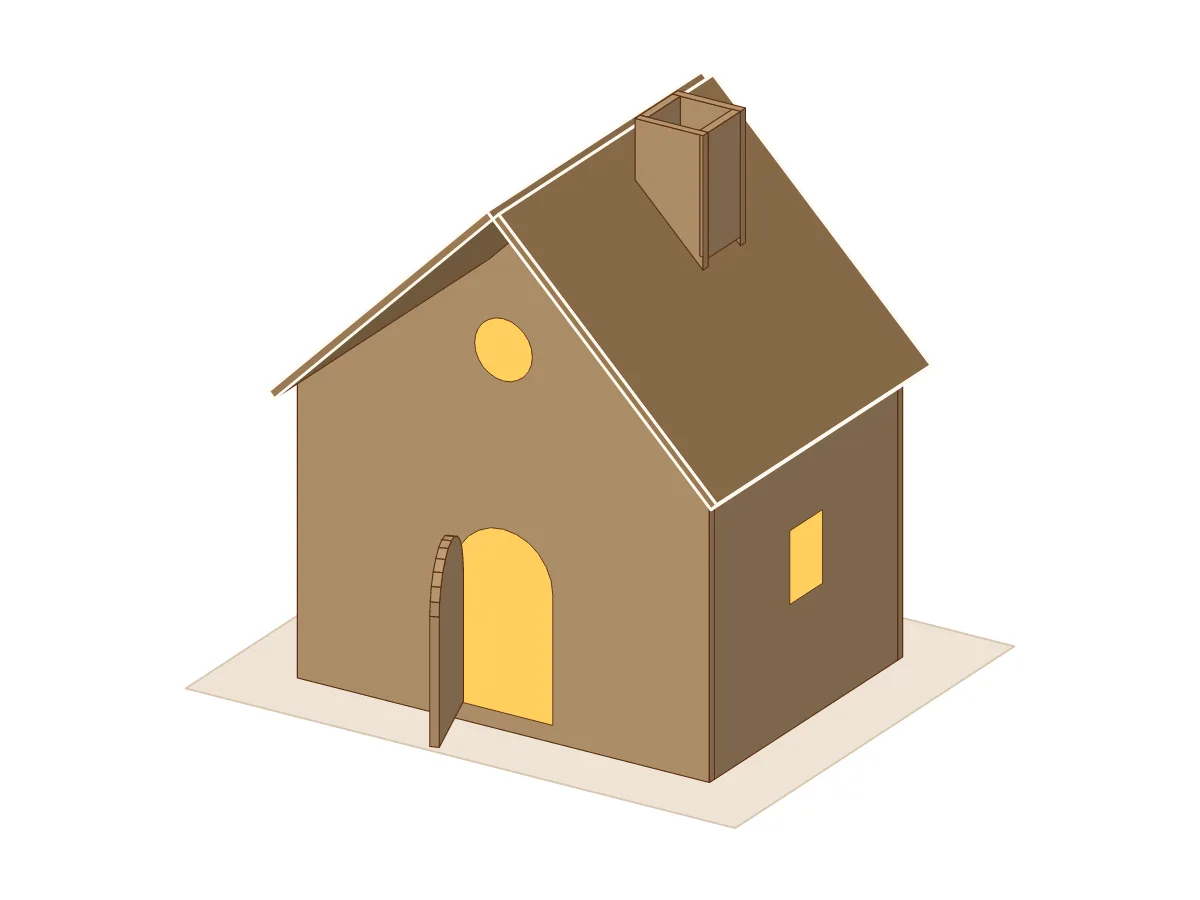
Assembled classic house, 6 × 4.5 × 4 inches
Print at 100% (Actual size). The check line should measure exactly 2 in5 cm.
Customize size
Cardboard house pieces and measurements
The default cardboard house is 6 in15.2 cm wide, 4.5 in11.4 cm deep and has 4 in10.2 cm walls, cut from cardboard 3 mm thick. The roof is one piece, 9 in22.8 cm from eave to eave, with a dashed line across the middle where it folds.
| Piece | Cut | Pattern size |
|---|---|---|
| Front wall | 1 | 6 × 7 in15.2 × 17.8 cm |
| Back wall | 1 | 6 × 7 in15.2 × 17.8 cm |
| Door | 1 | 1.4 × 2.5 in3.7 × 6.3 cm |
| Side wall | 2 | 4.3 × 4 in10.8 × 10.2 cm |
| Roof | 1 | 5 × 9 in12.7 × 22.8 cm |
| Chimney front and back | 2 | 1 × 1.8 in2.5 × 4.6 cm |
| Chimney side, short | 1 | 0.8 × 0.8 in1.9 × 2.1 cm |
| Chimney side, tall | 1 | 0.8 × 1.7 in1.9 × 4.3 cm |
| 10 pieces to cut from 8 patterns on 4 Letter sheets. | ||
- Cardboard
- About 190 sq in (1,250 cm²)1,250 cm² (190 sq in)
- Board
- At least 8 × 6.5 in20.3 × 16.5 cm
Measure your cardboard before you print and enter the real thickness under Customize size. Corrugated board from a shipping box is often 3 to 4 mm; the card of a cereal box is under 1 mm. The side walls are shorter than the house is deep by twice that number.
How to use the cardboard template
- Print at 100% and check that the line on each sheet measures 2 in (5 cm on A4).
- Cut out the paper patterns and trace them onto the cardboard. Place the roof so its fold line runs along the flutes, the ridges inside corrugated board, because it folds more cleanly that way.
- Cut on a cutting mat with a sharp craft knife and a metal ruler. Several light passes cut cleaner than one hard one.
- Score the dashed line on the roof with the back of the knife or an empty ballpoint pen, without cutting through, then fold.
How to put a cardboard gingerbread house together
Hot glue sets in seconds, so you can hold each wall in place instead of propping it up. Glue on the outside of a joint shows, so run the bead along the inside edge.
- Print the template at 100% (Actual size) and check that the line on each sheet measures exactly 2 in. Cut out the paper pieces.
- Trace the pieces onto cardboard 3 mm thick and cut them out with a craft knife on a cutting mat, using a metal ruler for the straight edges.
- Run hot glue along the bottom and side edges of the front wall and one side wall. Stand them on the board at a right angle, with the end of the side wall tucked behind the front wall.
- Add the second side wall, then the back wall. The side walls fit between the front and back walls, so the house measures exactly 6 in by 4.5 in on the outside.
- Score the dashed line across the roof with the back of a knife, without cutting through, and fold the roof along it. Glue it onto the sloped edges of the front and back walls and the tops of the side walls.
- Put the chimney together as a box on the work surface: the front and back pieces outside, the short side between them on the uphill end. When it has set, glue it onto the right side of the roof. The slanted bottom edges match the roof pitch.
- Glue the door to one side of the opening so it stands slightly open.
- Paint the "icing": white dimensional (puffy) paint gives raised lines along the roof edges and around the windows.
What you'll need
- Craft knife on Amazon (opens in a new tab)Cuts clean edges in cardboard; change the blade when it starts to tear.See on Amazon
- Self-healing cutting mat on Amazon (opens in a new tab)Protects the table and holds the cardboard still while you cut.See on Amazon
- Metal ruler on Amazon (opens in a new tab)Guides the knife along straight edges and the roof fold line.See on Amazon
- Hot glue gun on Amazon (opens in a new tab)Holds the walls together in seconds, so nothing needs propping up.See on Amazon
- White puffy paint on Amazon (opens in a new tab)Draws raised lines that look like piped icing.See on Amazon
- Battery LED fairy lights on Amazon (opens in a new tab)Light the house from inside without a cord to the wall.See on Amazon
gingerbreadtemplate.com is a participant in the Amazon Services LLC Associates Program, an affiliate advertising program designed to provide a means for sites to earn advertising fees by advertising and linking to Amazon.com.
Paint instead of icing
White puffy paint makes the icing on a cardboard house. It dries as a raised line, so it looks piped along the roof edges, around the windows and on the corners.
Brown kraft cardboard already looks like baked dough. If yours is printed or white, paint it a warm brown first and let it dry before the white lines go on.
Lighting a cardboard house
The windows and the door are already cut out, which makes a cardboard house a good lantern. Slide a string of battery LED lights in through the back before you glue on the roof, with the battery box where you can reach it.
Tape tracing paper or baking parchment behind the windows from inside: the light comes through soft and you don't see the bulbs.
FAQ
What cardboard works best?
Stiff corrugated board around 3 mm thick, like a clean shipping box, for houses 4 inches wide and up. For mini houses, thinner card is easier to cut. Whatever you use, enter its thickness so the walls meet.
What glue should I use?
A hot glue gun is the quickest, because each joint holds as soon as the glue cools. White craft glue works too but needs the pieces held or taped while it dries.
Can children help?
The cutting is a job for an adult with a craft knife. Painting the house and adding the puffy-paint icing is where children can take over.
Can I use the template for a paper model?
Yes. Set the thickness to your paper or card, often well under 1 mm, and print on card stock. A paper model is also a quick way to try a size before you bake it.
More gingerbread house templates
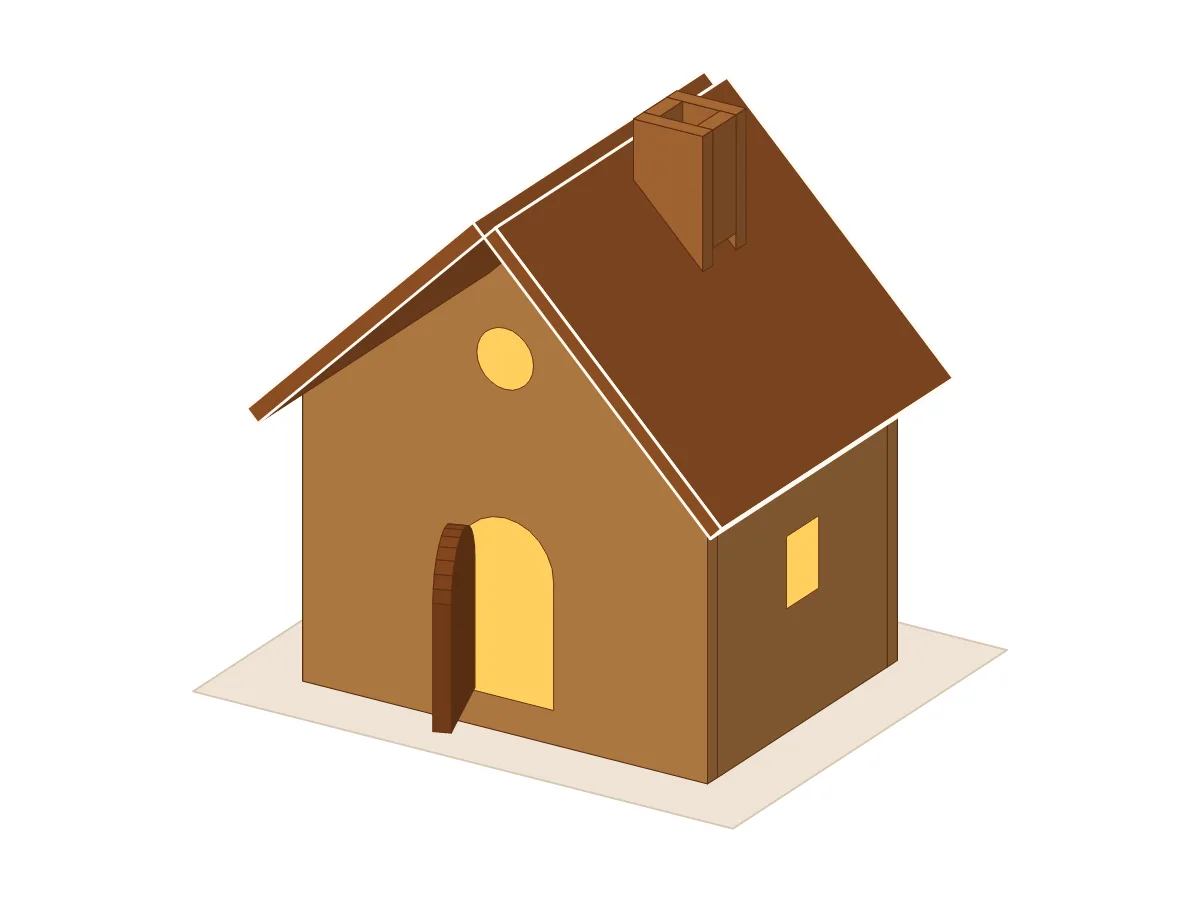 Gingerbread house templateThe classic house with a pitched roof, a door and a chimney. Any size.
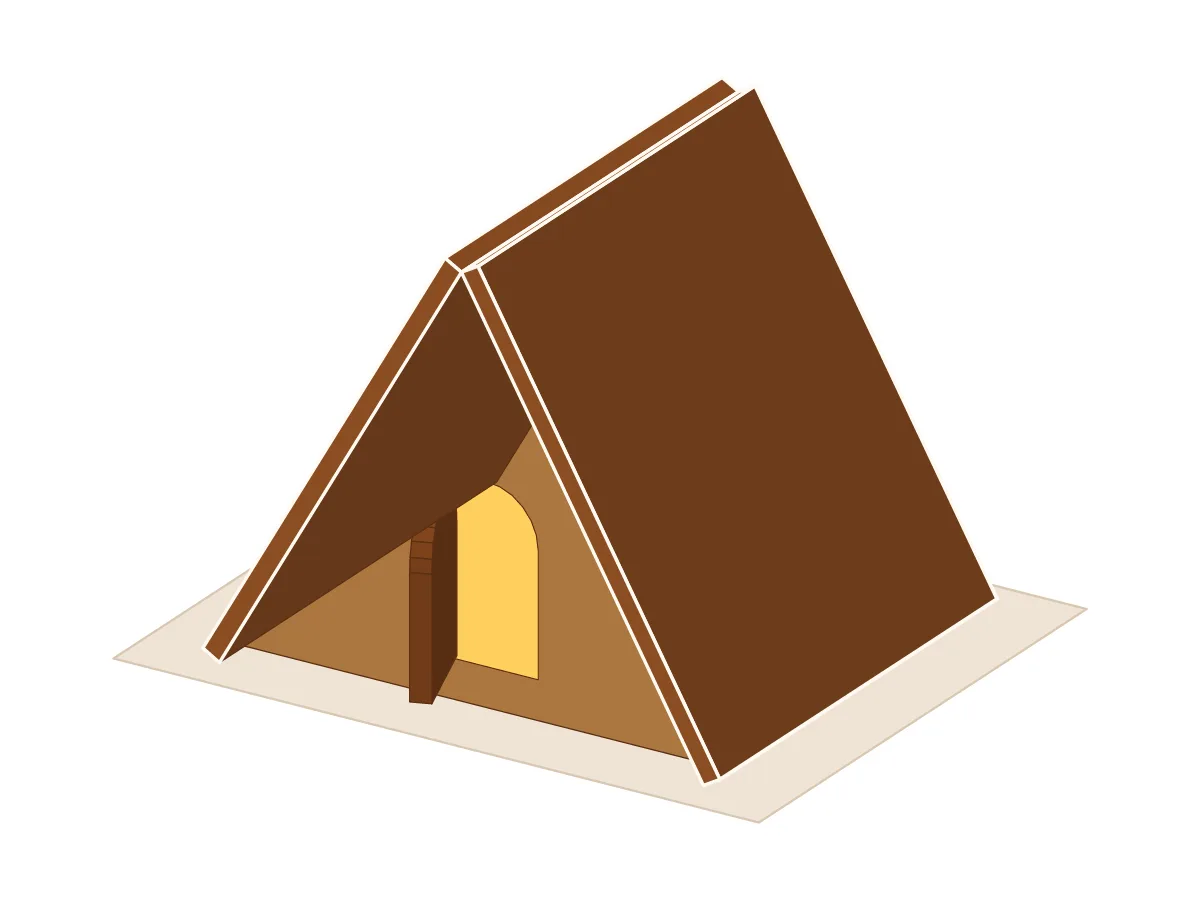 A-frame gingerbread houseTwo triangles and two panels that are both roof and walls.
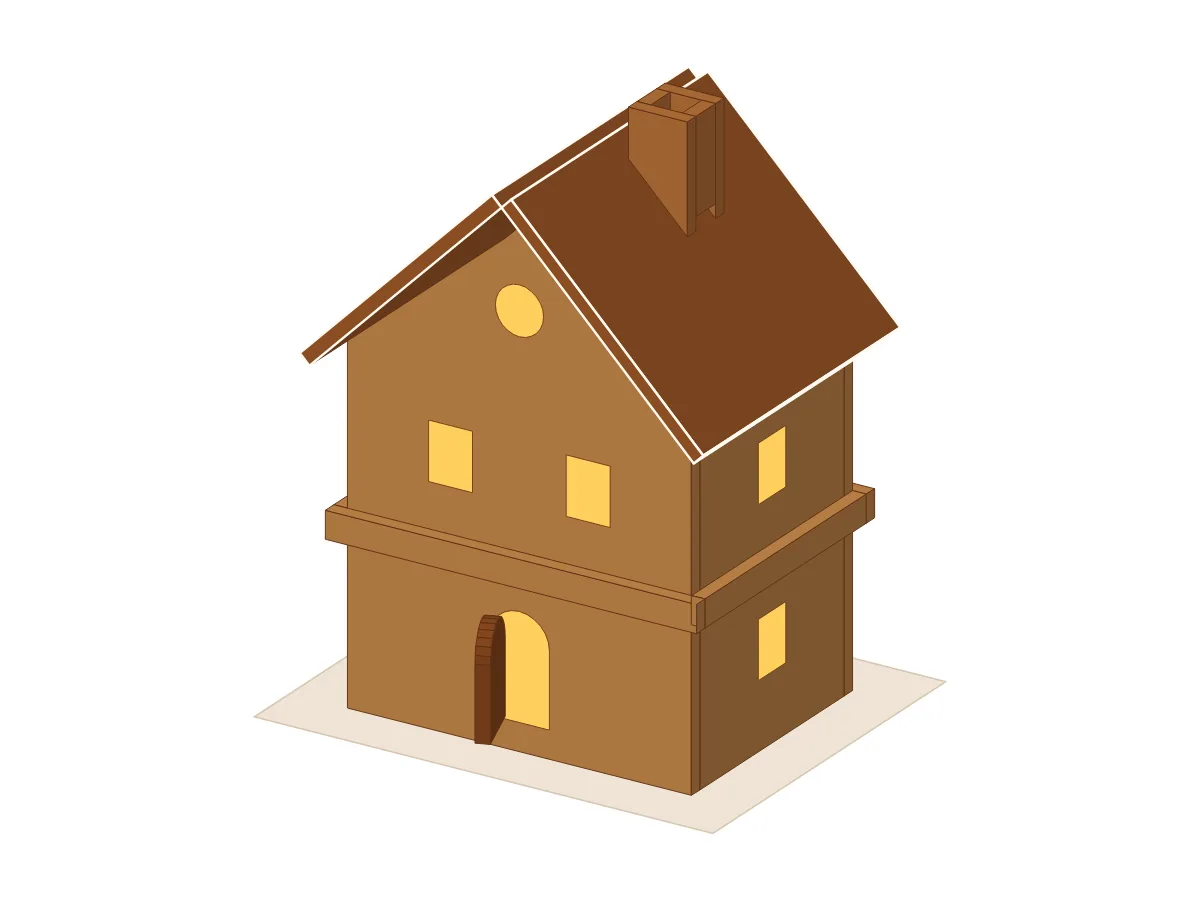 Two-story gingerbread houseTall walls, two rows of windows and a band between the floors.
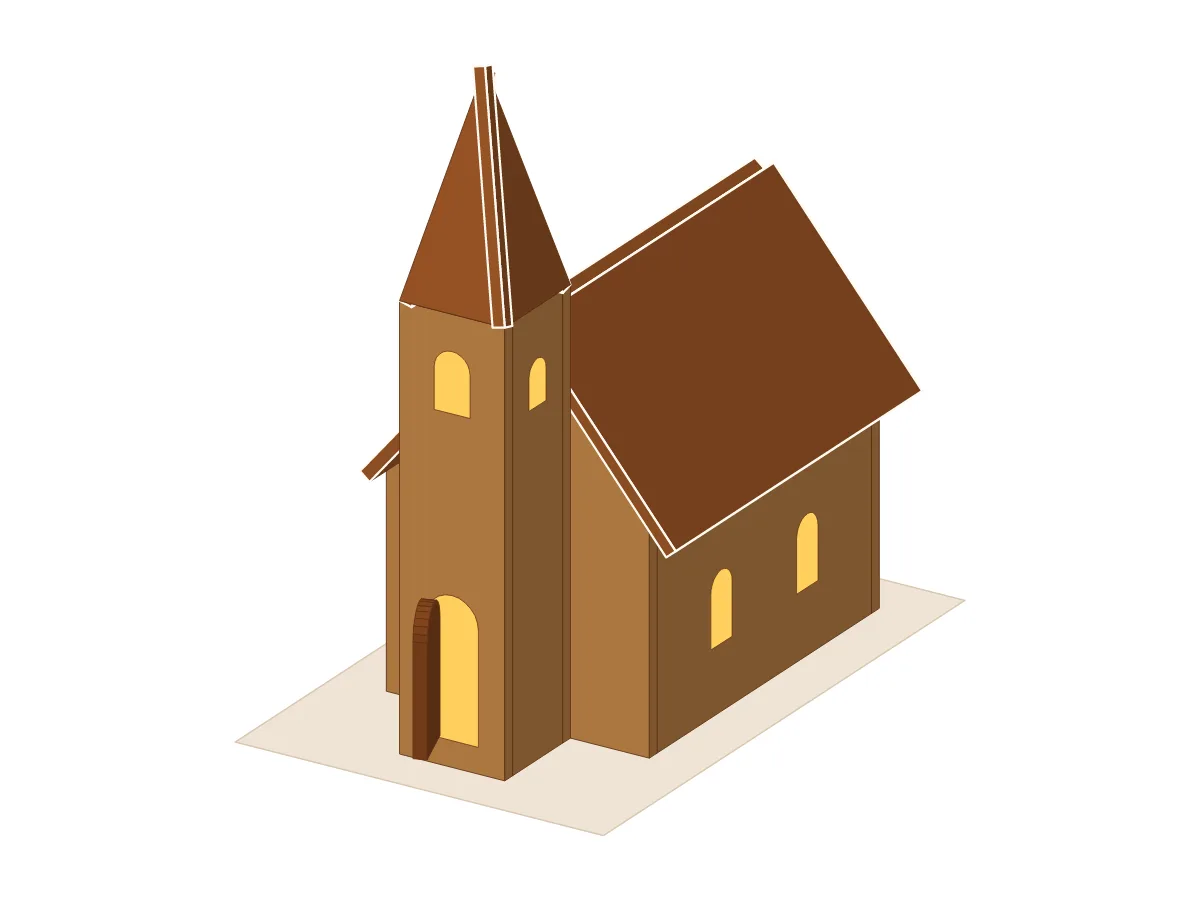 Gingerbread churchA long nave, a square tower in front and a four-sided spire.
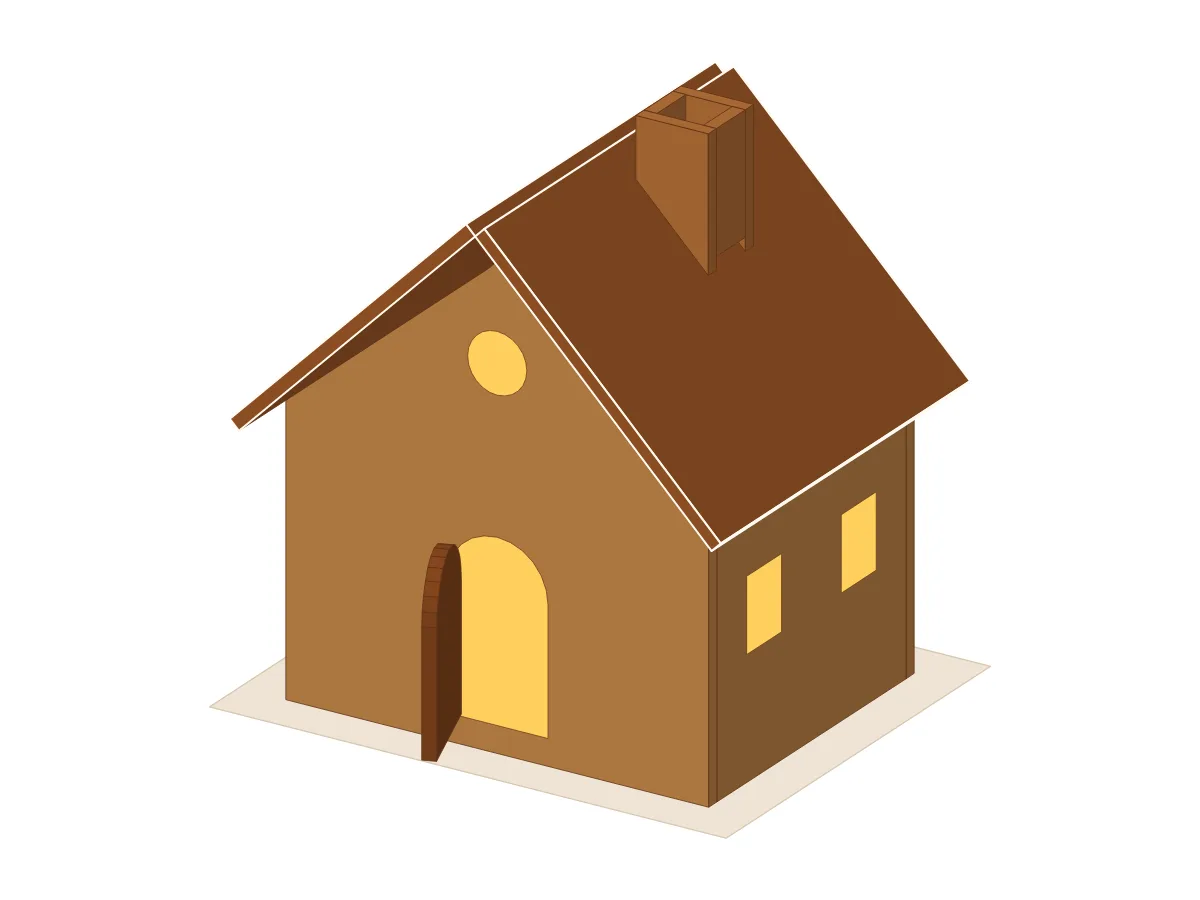 Large gingerbread houseA 9-inch house with thicker dough and an inner brace for the roof.
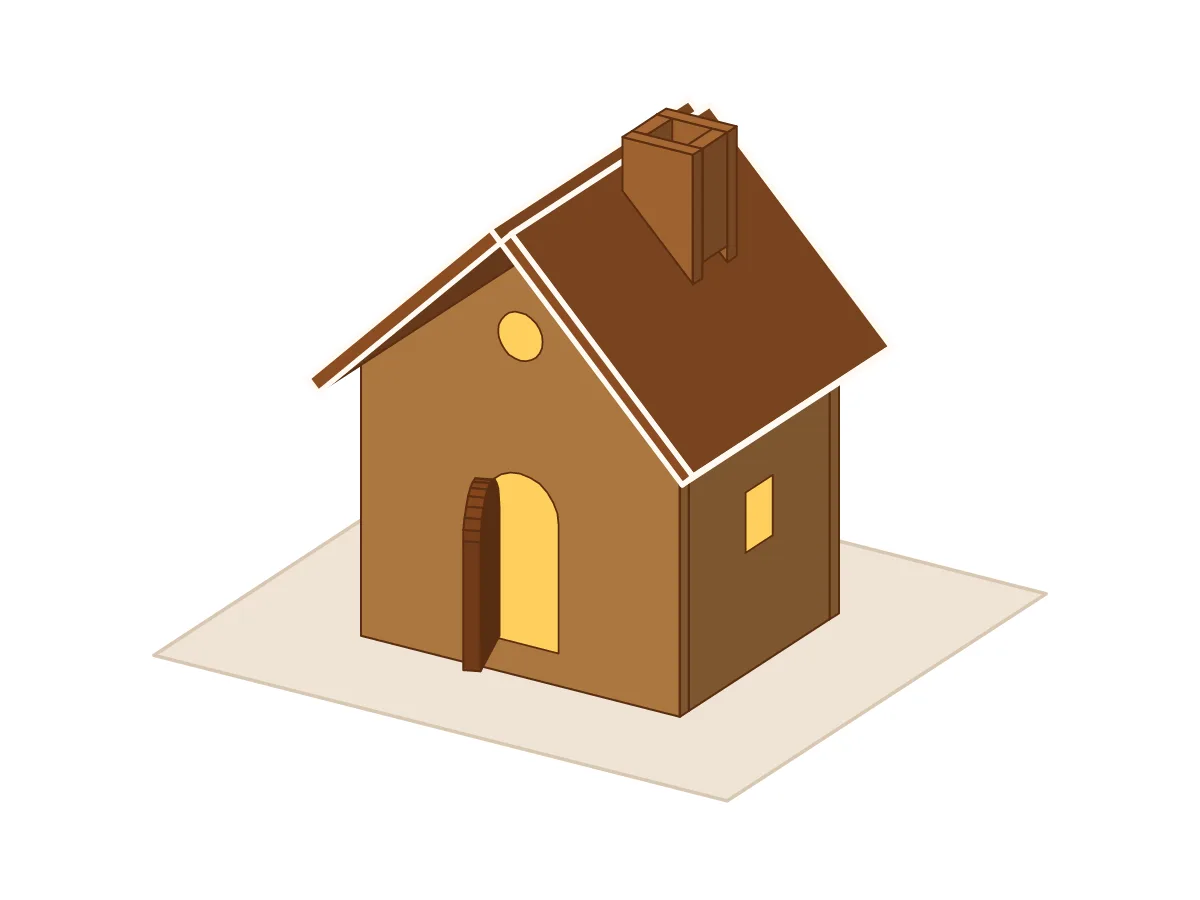 Mini gingerbread houseA 2.5-inch house, with an option to make it a mug topper.
 Easy gingerbread houseA small house with five patterns to cut and no chimney.