Gingerbread House Recipe
A gingerbread dough made from caramel instead of molasses or honey, for the walls and roof of a template house. It rolls out without flour on the board, and the calculator below works out how many batches your house takes.
- One batch
- 1.8 lb (820 g)820 g (1.8 lb)
- Chill
- 3–4 hours
- Bake
- 340°F (170°C)

Gingerbread house dough
One batch makes about 1.8 lb (820 g)820 g (1.8 lb) of dough. Pick the house and the size you will print, and the ingredient list changes to the batches it takes. The amount is the template's own: the area of every piece times the thickness, plus 30% for scraps.
Ingredients
This house takes about 2 lb (920 g)920 g (2 lb) of dough: 1 1/2 batches of the recipe.
| Ingredient | Weight | US measure |
|---|---|---|
| Granulated sugar | 300 g | 1 1/2 cups |
| Boiling water | 263 g | 1 cup + 3 tbsp |
| Butter | 135 g | 1 stick + 1 1/2 tbsp |
| Spice mix (below) | 3.8 g | – |
| Table salt | 3.8 g | scant 3/4 tsp |
| Baking soda | 3.8 g | scant 3/4 tsp |
| Egg yolk | 15 g | 1 large yolk |
| All-purpose flour | 510 g | 4 1/4 cups |
Cup and spoon measures are rounded. A kitchen scale is more exact, which matters most for the baking soda.
Spice mix
Mix more than one batch needs, so every batch gets the same proportions, and weigh 2.5 g of it into the dough.
- Ground cinnamon1 1/2 tsp
- Ground nutmeg1 tsp
- Ground ginger1 tsp
- Ground cardamom1/2 tsp
- Ground cloves1/2 tsp
- Ground white pepper1/2 tsp
Steps
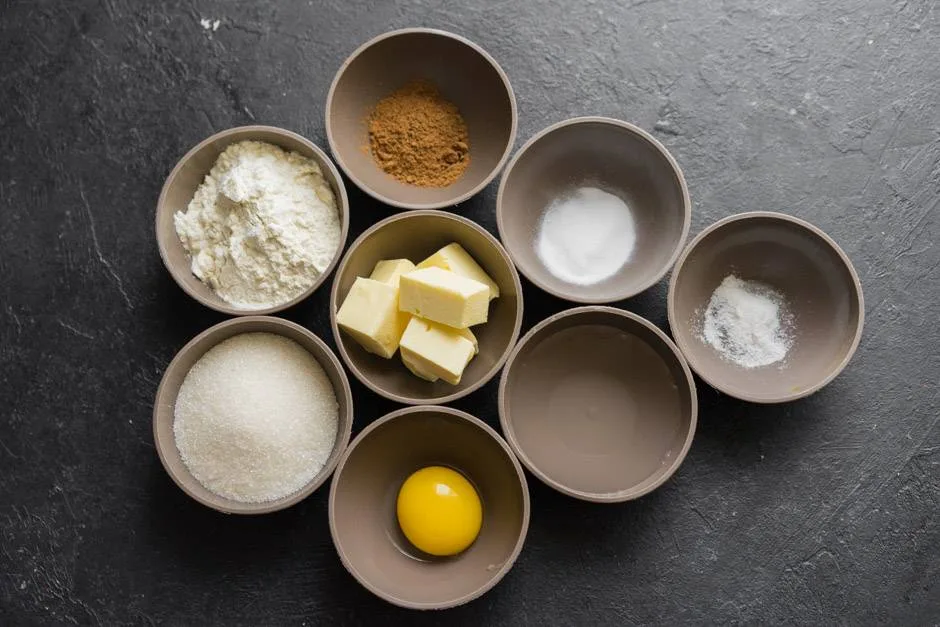
- Bring the water to a boil in a small pan and keep it hot on the stove.
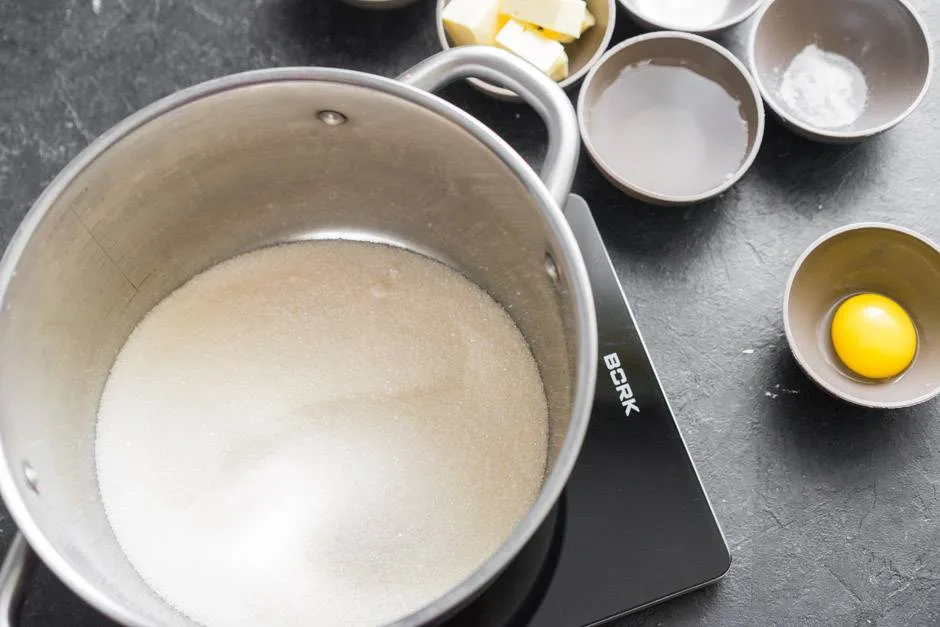
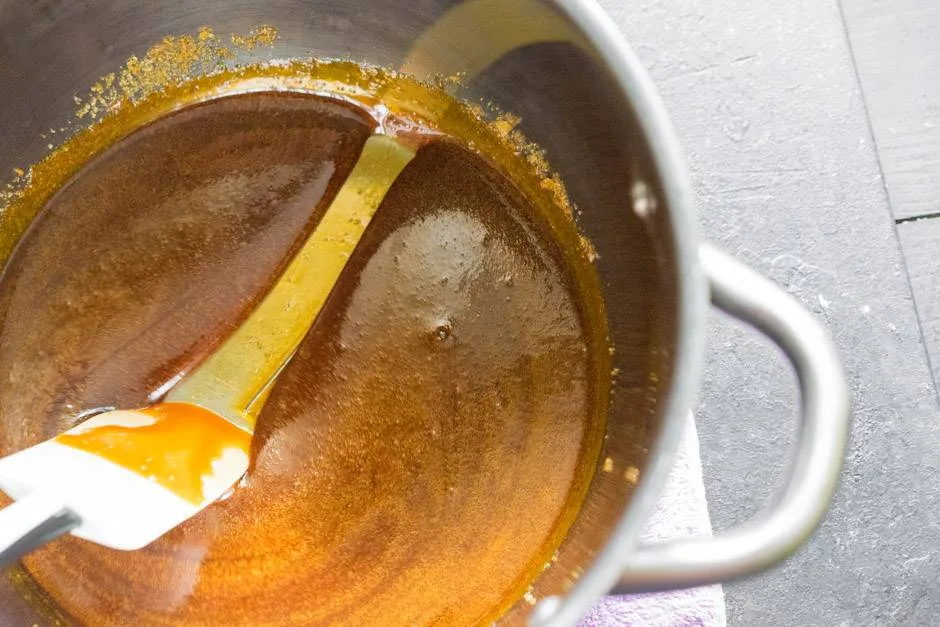
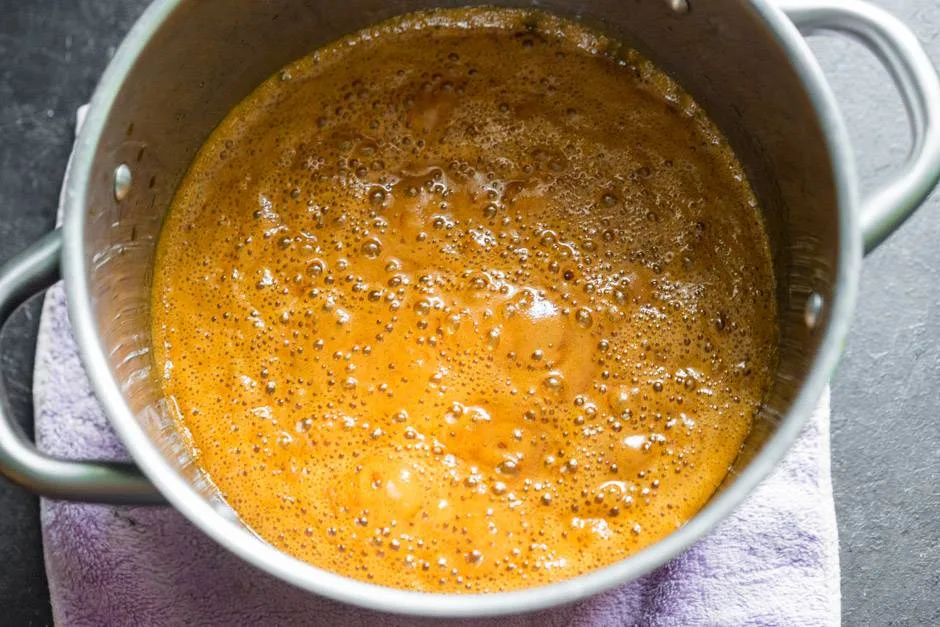
- Put the sugar in a heavy pot that holds at least 3 quarts (3 liters) and melt it over medium heat into a clear amber caramel. Stir as little as possible. If the syrup turns cloudy, take the pot off the heat for half a minute, then go on.
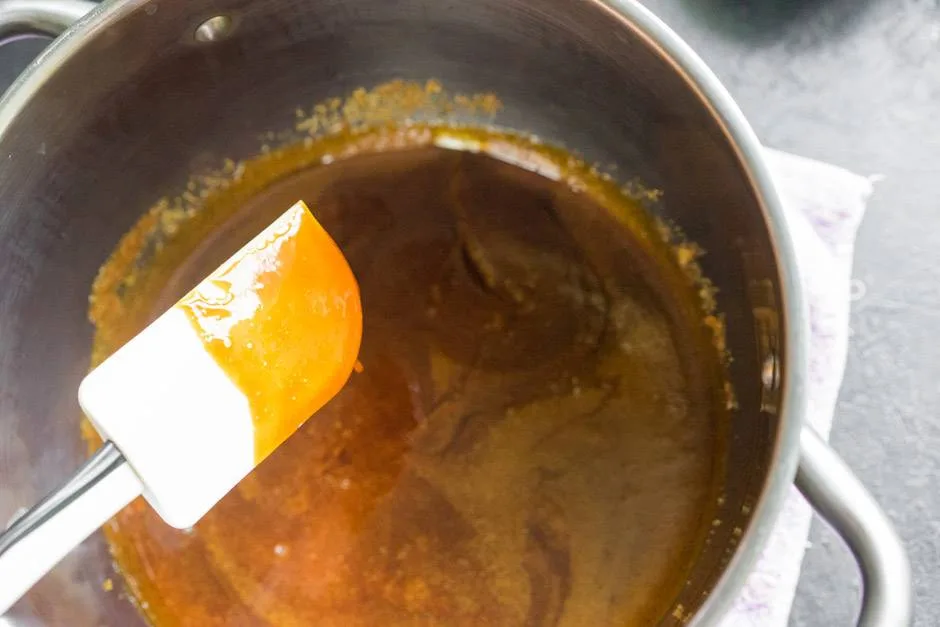
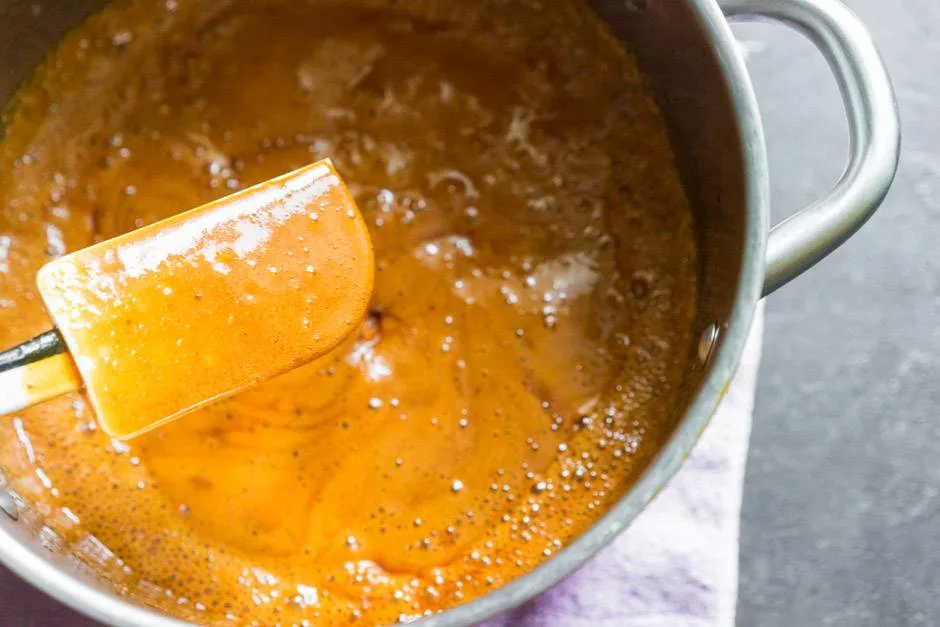
- Pour the boiling water into the caramel a little at a time, stirring with a wooden spoon. It hisses and bubbles up, so pour slowly. If hard lumps of caramel form, keep the syrup on high heat and stir until they melt.
- Stir in the butter in small pieces until it melts.
- Stir in the spice mix, salt and baking soda. The syrup foams and rises, which is why the pot has to be big.
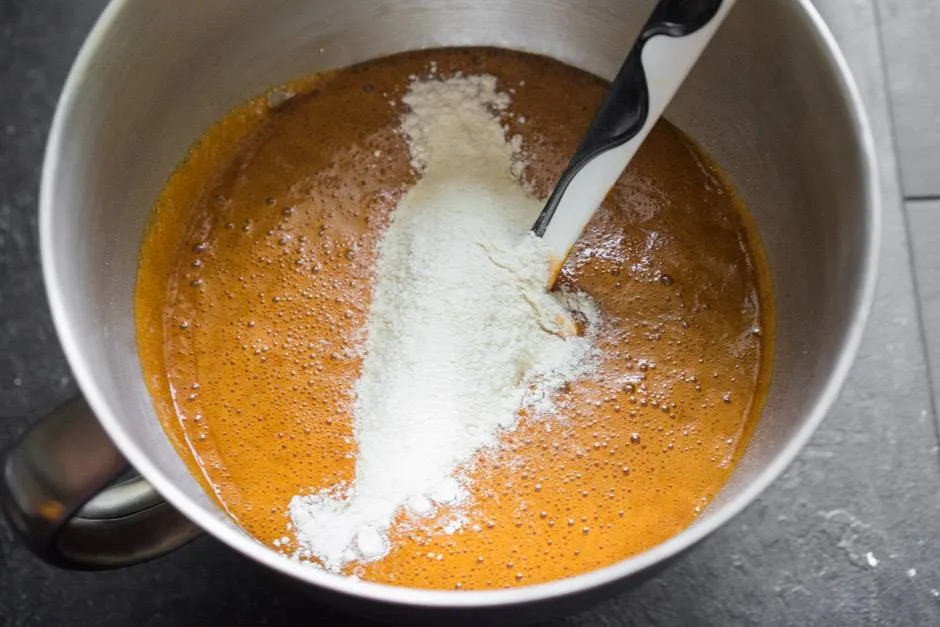
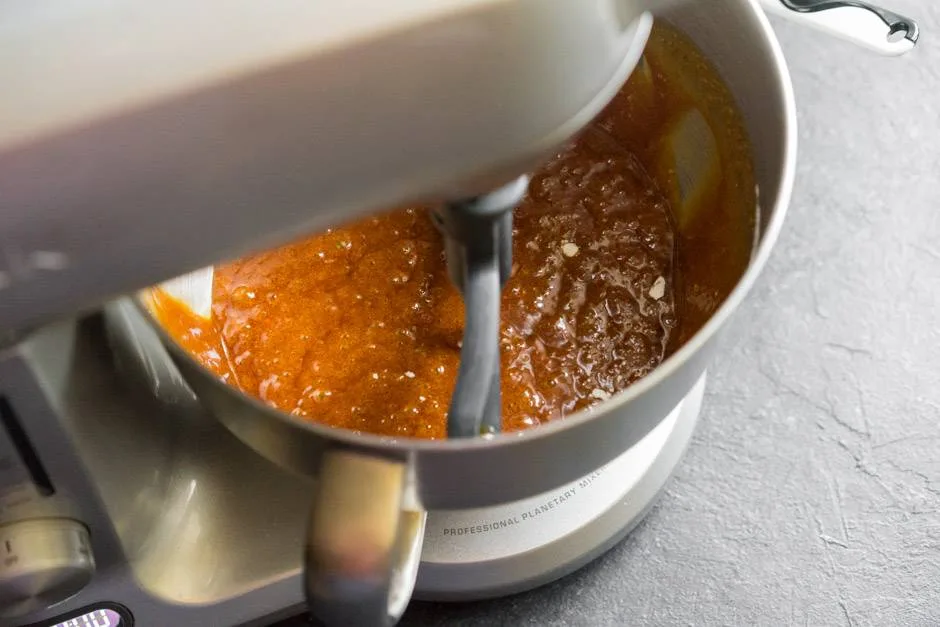
- Pour the syrup into the bowl of a stand mixer. With the paddle at medium speed, beat in about a quarter of the flour, then the egg yolk, then the rest of the flour.
- Scrape the dough together. It is soft while it is warm and firms up like modeling clay as it cools. Wrap it in plastic and chill it for at least 3 to 4 hours.
- Roll the cold dough between rolling guides or with a rolling pin with thickness rings, to the thickness explained below. It does not stick, so the board needs no flour.
- Lay the paper patterns on the dough, cut around them with a sharp knife and move the pieces onto a baking sheet lined with a silicone mat or parchment.
- Bake at 340°F (170°C) on the regular setting, without the fan, until the pieces are firm.
- Trim each piece against its pattern while it is still warm. Let the pieces cool and harden, ideally for a day, before you build.
- Decorate the finished pieces with icing. Sketch a rough layout first with an edible marker.
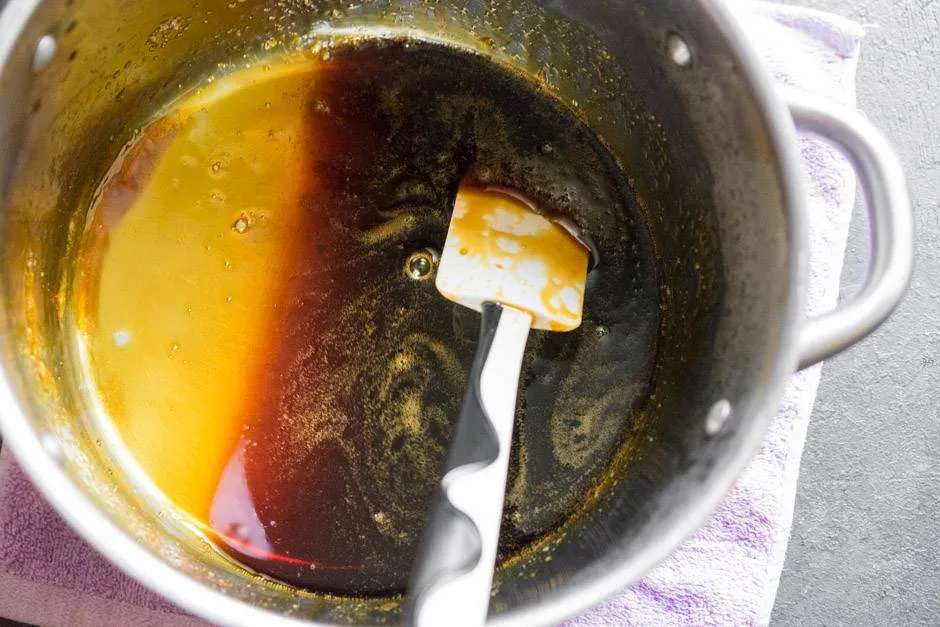
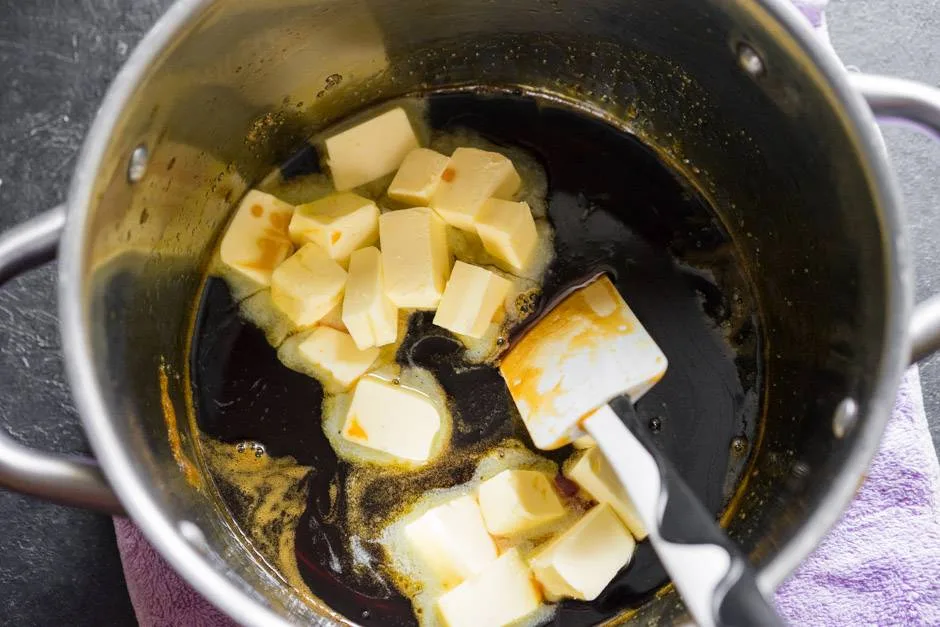
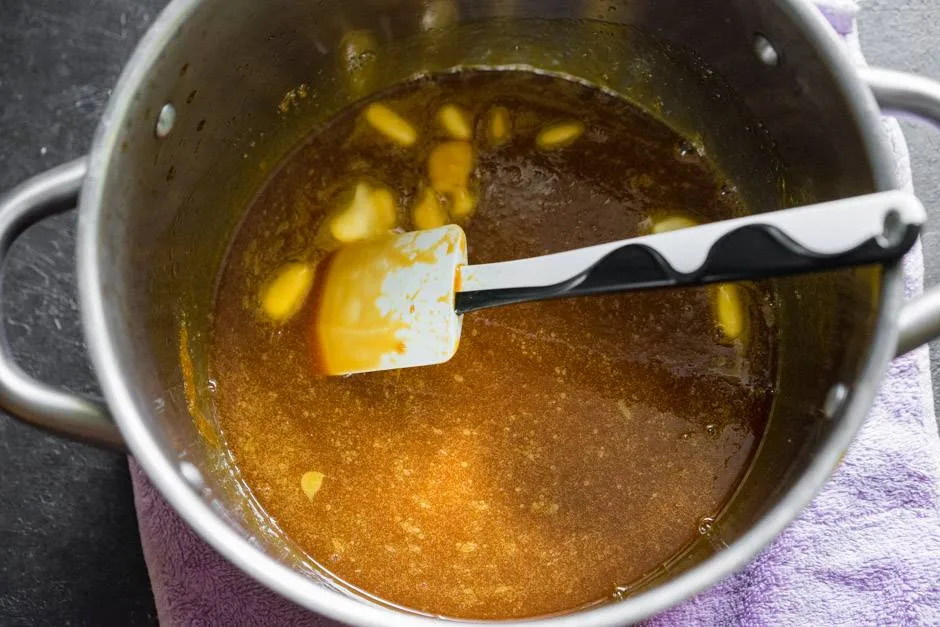
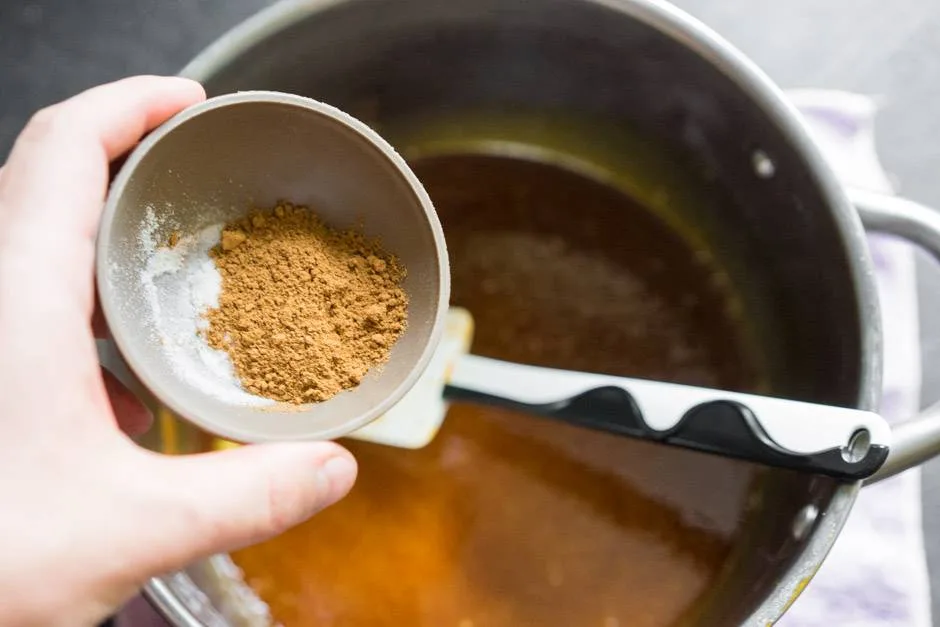

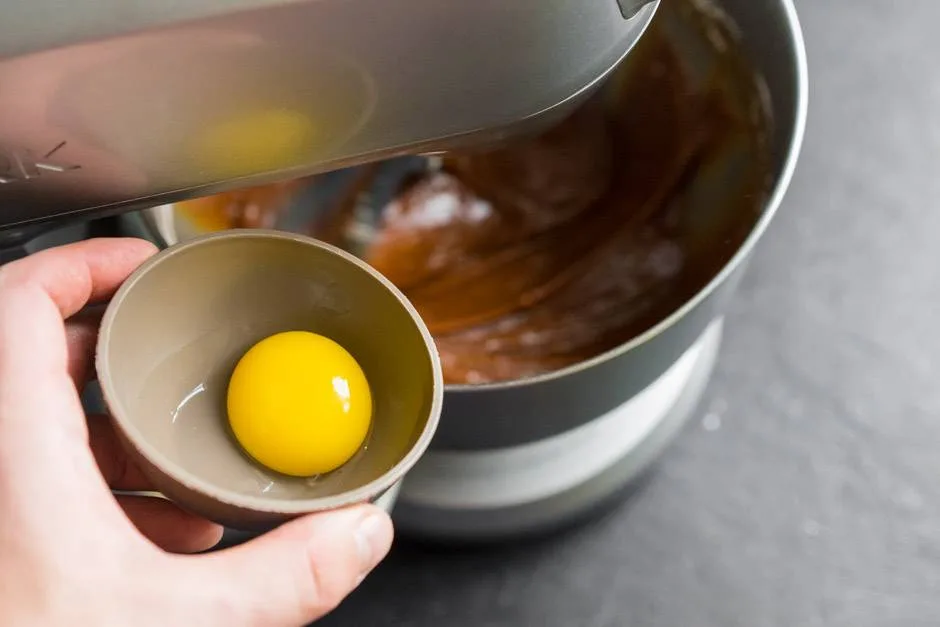
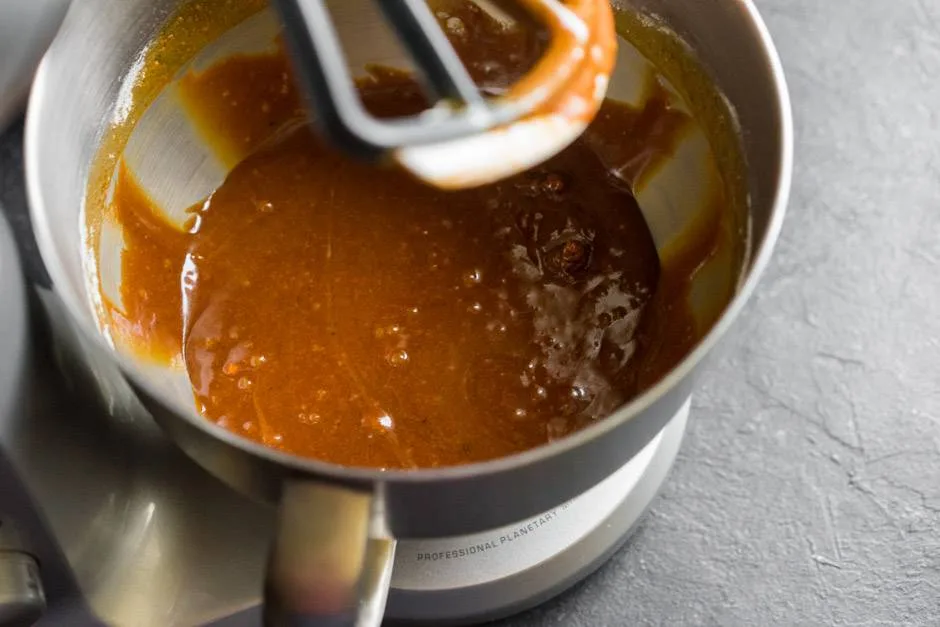
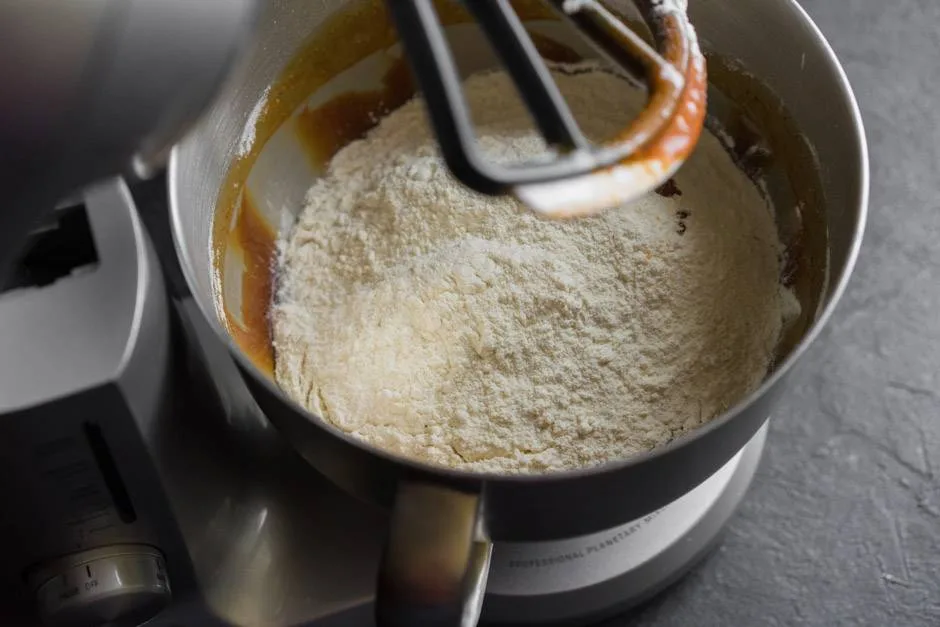
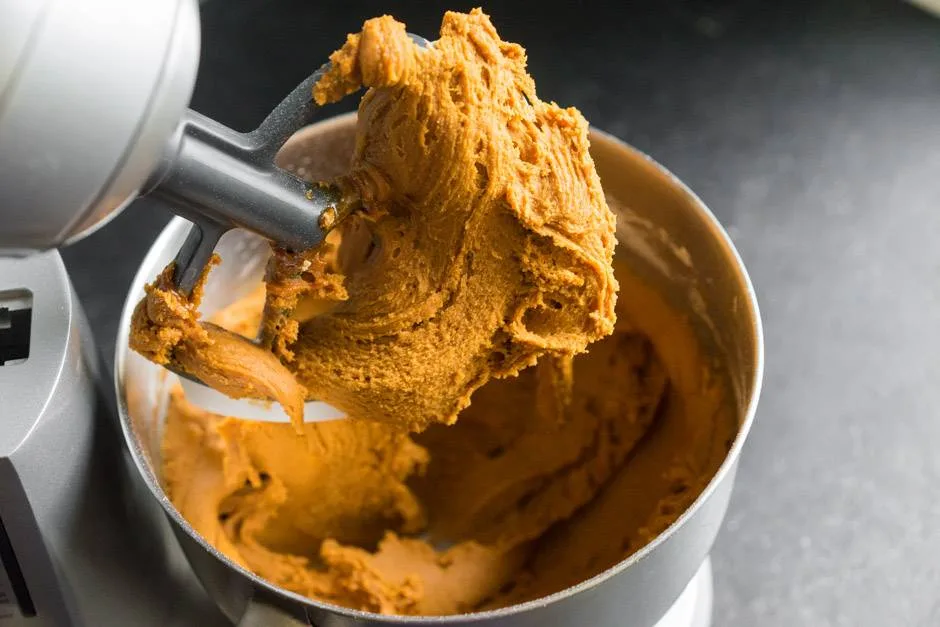
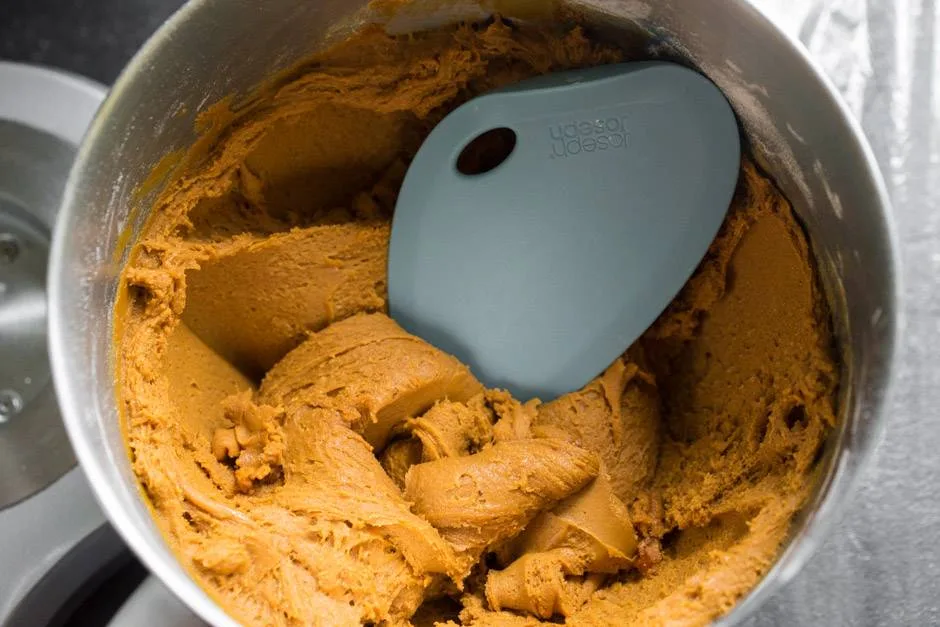
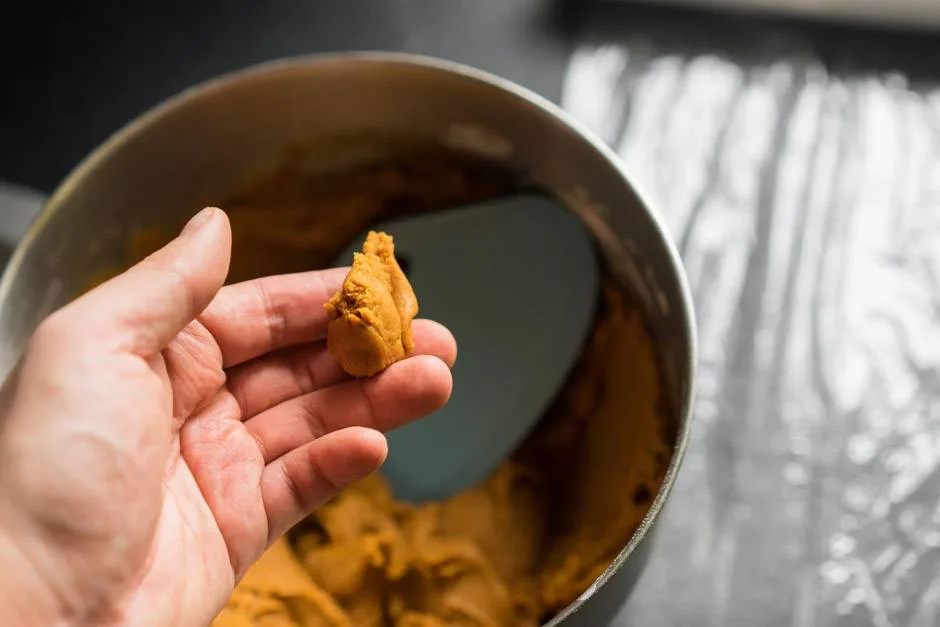
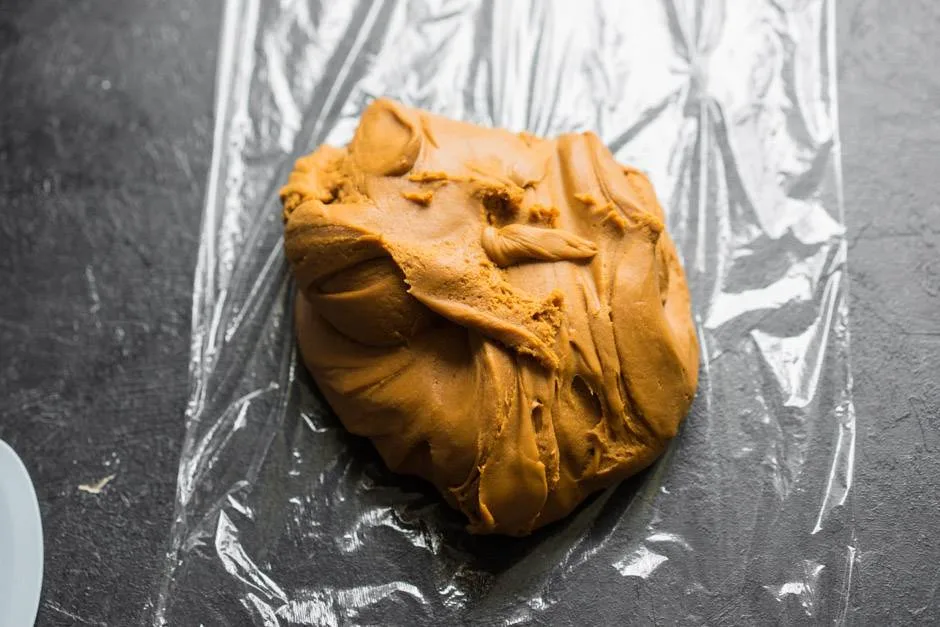
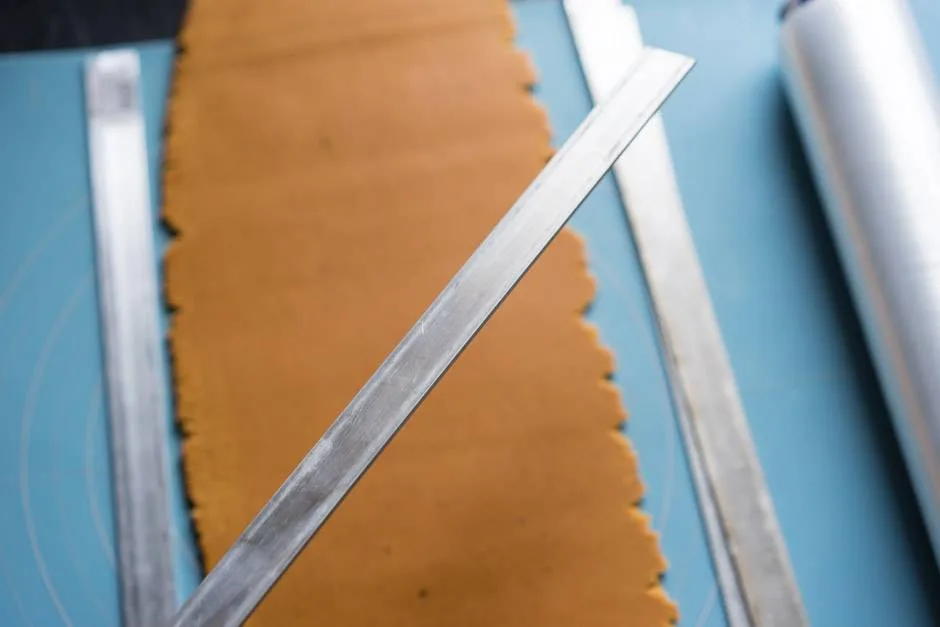
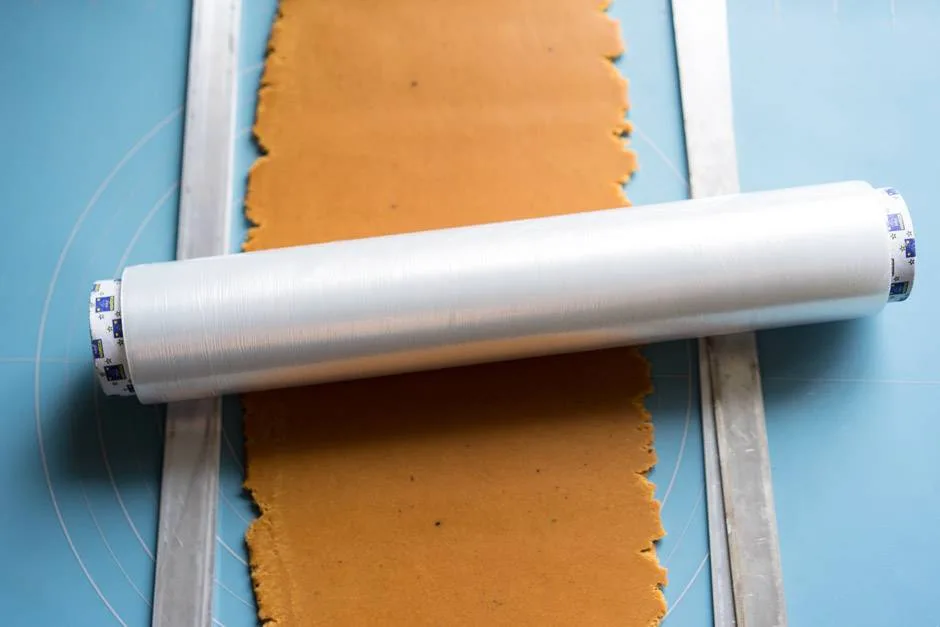
Roll for the thickness of the baked piece
The template works out where the walls meet from one number: the thickness of the baked pieces. This dough rises in the oven, so a piece comes out thicker than it was rolled.
Bake one strip first, measure it with a ruler and enter that thickness under Customize size on the gingerbread house template. Then roll every piece to the same thickness. A wall rolled thicker at one end will not meet its neighbor cleanly.
Why the dough starts from caramel
Most gingerbread house recipes take their color and flavor from molasses or honey. This one starts from caramel: sugar melted until amber, then loosened with boiling water. The caramel turns the dough deep brown, so the recipe needs no honey or molasses. The only egg in it is part of one yolk.
The dough is mostly sugar and flour. Cold, it is firm and does not stick, so it rolls out without flour on the board, and wrapped in plastic it waits in the fridge for days until you are ready to bake.
Icing to glue the house
Glue the pieces with royal icing, not frosting. Frosting never sets hard, so walls glued with it lean and slide. Make the icing with meringue powder or pasteurized egg whites, and let it set before the roof goes on: royal icing takes 2 to 4 hours to set fully. The assembly steps on each template page give the order of the walls and the roof.
FAQ
How much dough does a gingerbread house need?
The Medium classic house takes about 2 lb (920 g)920 g (2 lb) of dough, 1 1/2 batches of this recipe. The large gingerbread house takes about 6.3 lb (2.9 kg)2.9 kg (6.3 lb), 3 1/2 batches. The calculator above works it out for every house and size.
Why are the amounts in grams?
A batch takes only 2.5 g of baking soda, and a little more or less changes the texture of the gingerbread. A kitchen scale measures that exactly. The cup and spoon measures are rounded, so use them only if you have no scale.
Can I make the dough ahead?
Yes. It has to chill for at least 3 to 4 hours before rolling anyway, and wrapped in plastic it keeps in the fridge for days.
Can you eat the house?
Yes. This is the dough of decorated gingerbread cookies, baked longer, so it is harder than a cookie. For the cookies themselves, the gingerbread man template counts how many a batch makes.
Templates for this dough
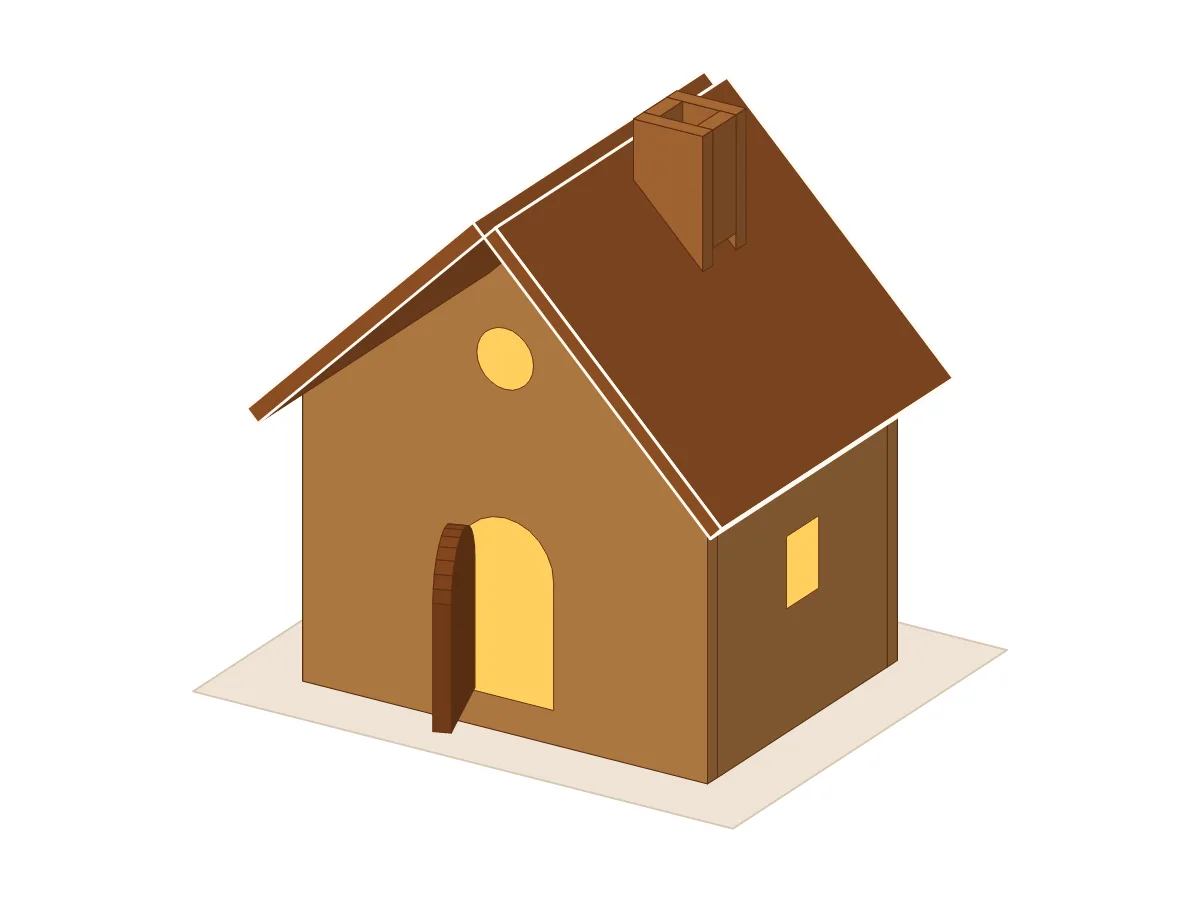 Gingerbread house templateThe classic house with a pitched roof, a door and a chimney. Any size.
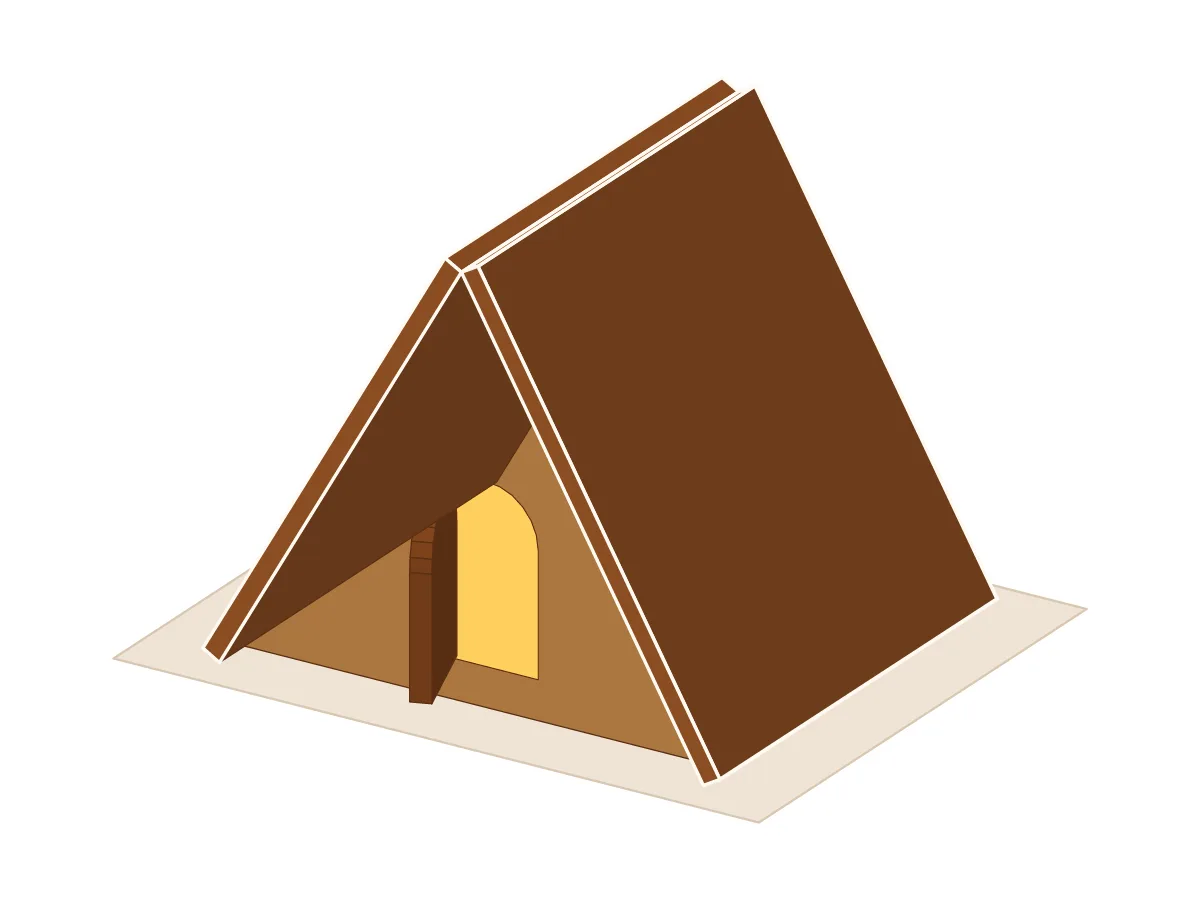 A-frame gingerbread houseTwo triangles and two panels that are both roof and walls.
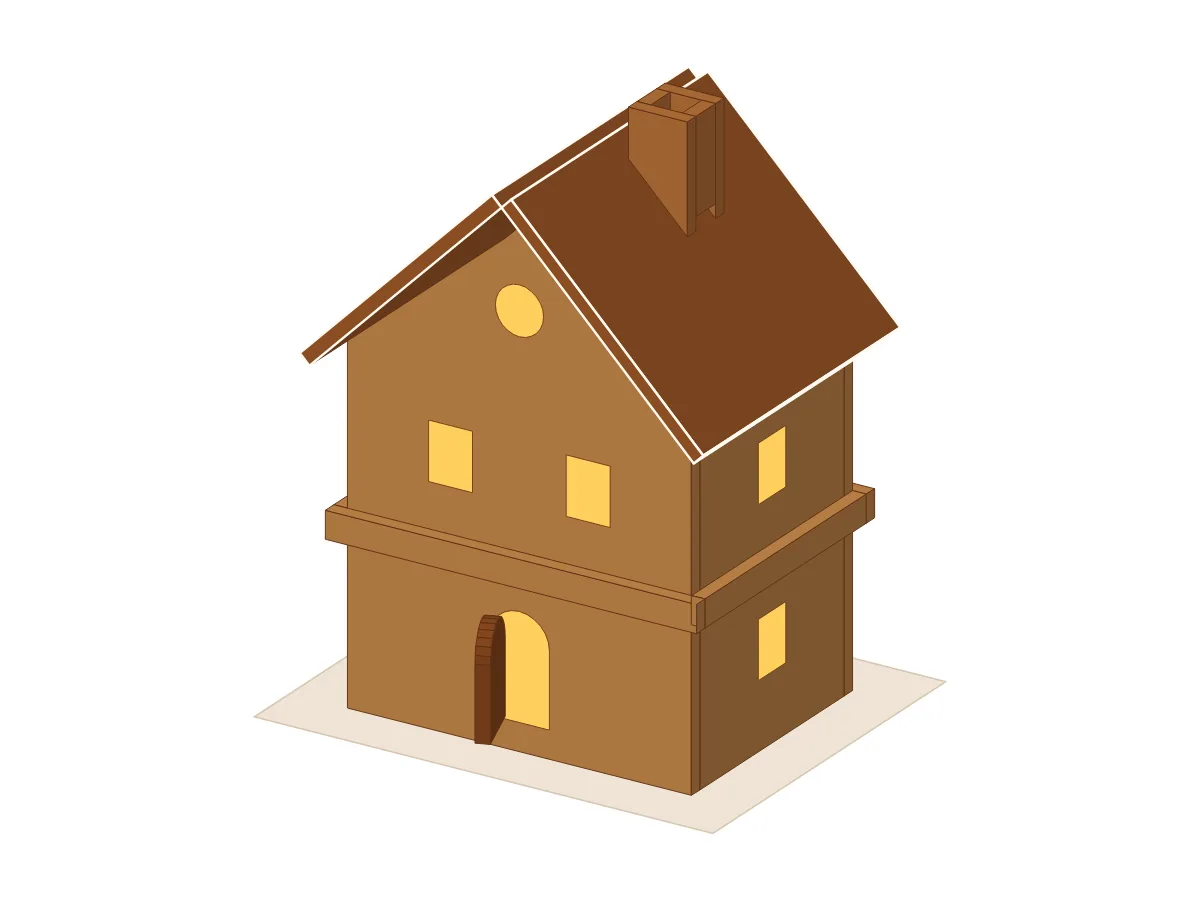 Two-story gingerbread houseTall walls, two rows of windows and a band between the floors.
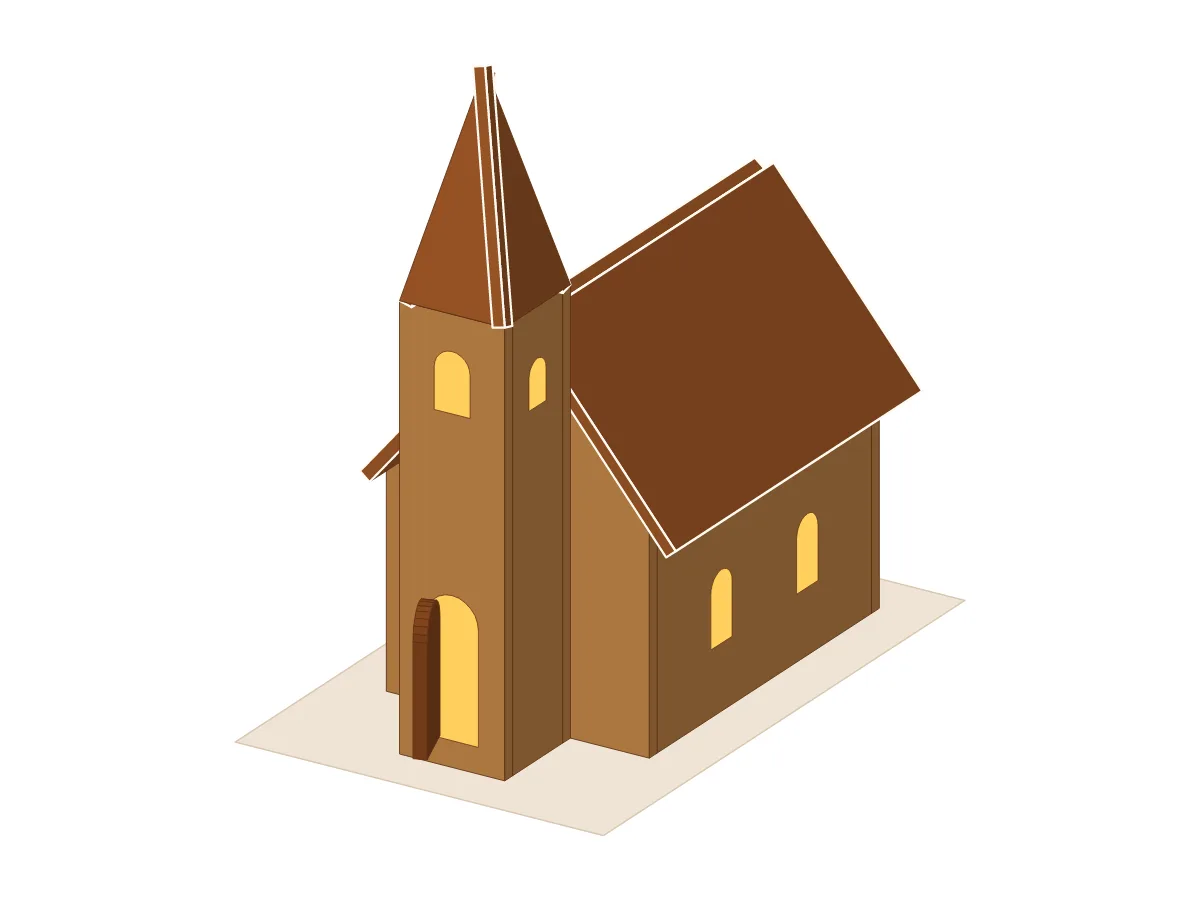 Gingerbread churchA long nave, a square tower in front and a four-sided spire.
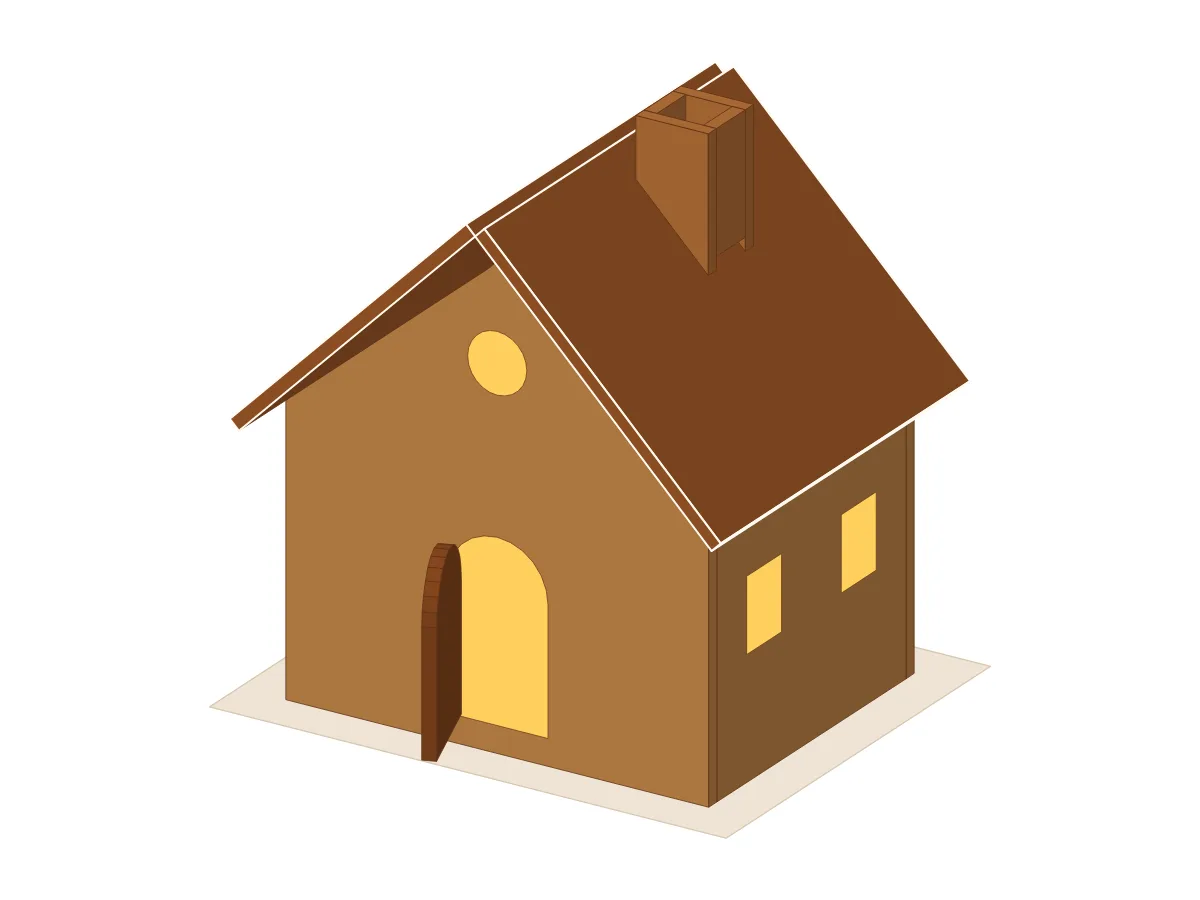 Large gingerbread houseA 9-inch house with thicker dough and an inner brace for the roof.
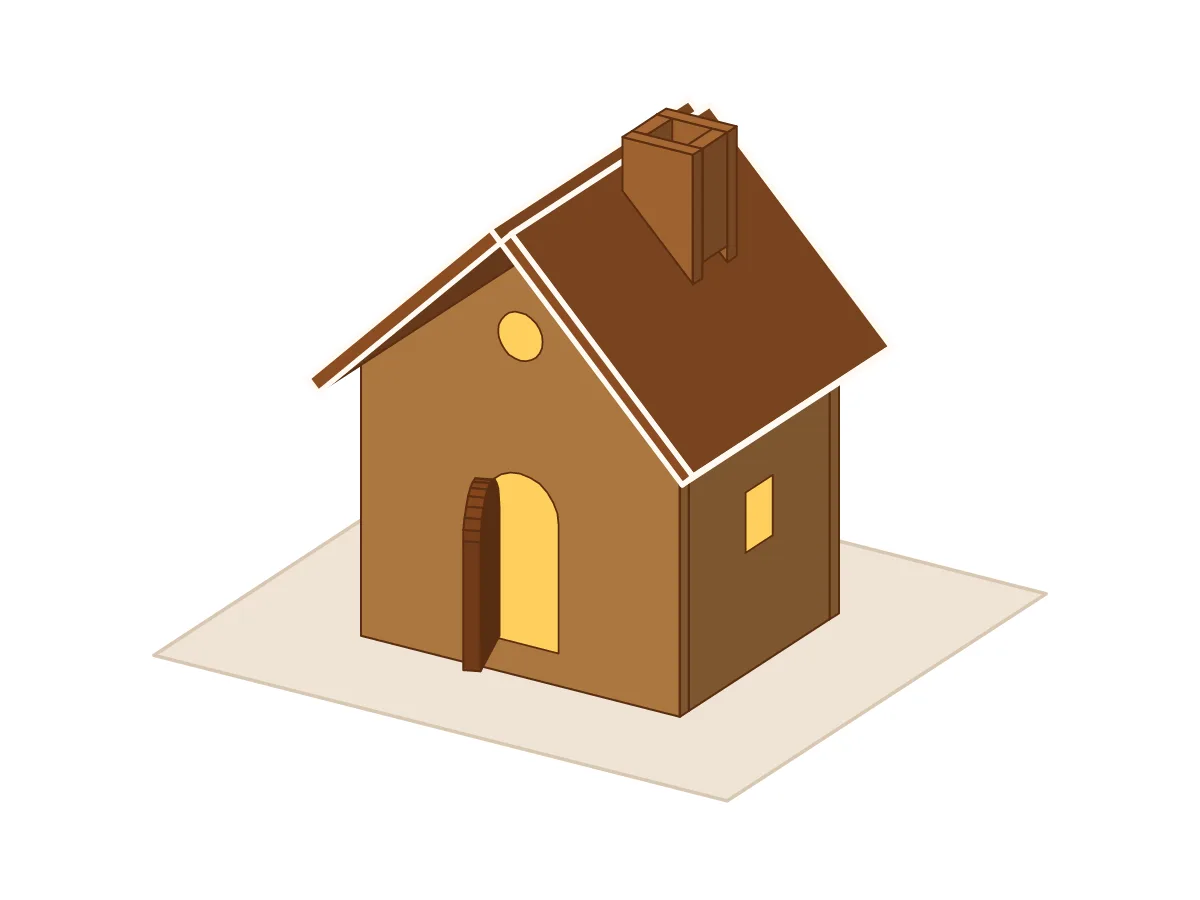 Mini gingerbread houseA 2.5-inch house, with an option to make it a mug topper.
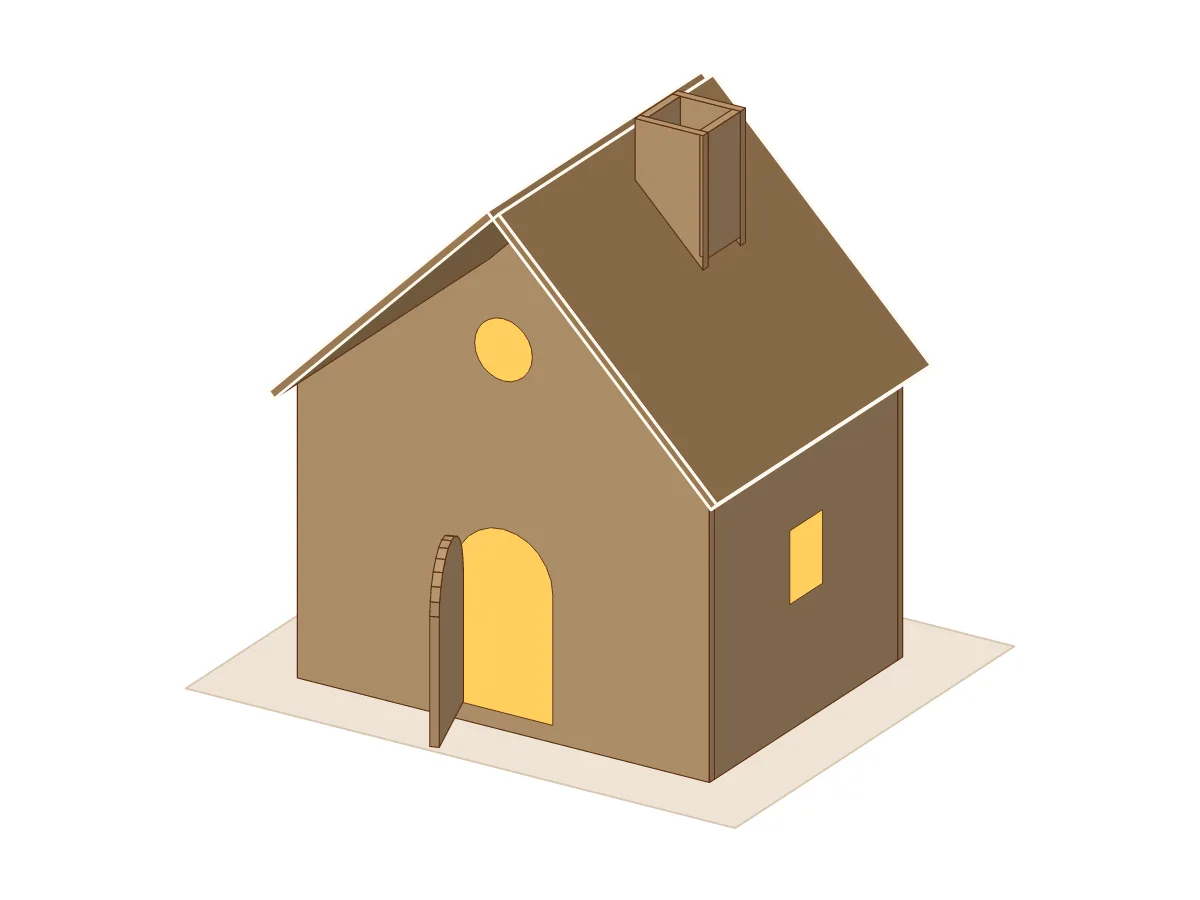 Cardboard gingerbread houseFor 3 mm cardboard, with a folded roof. Decor you can keep.
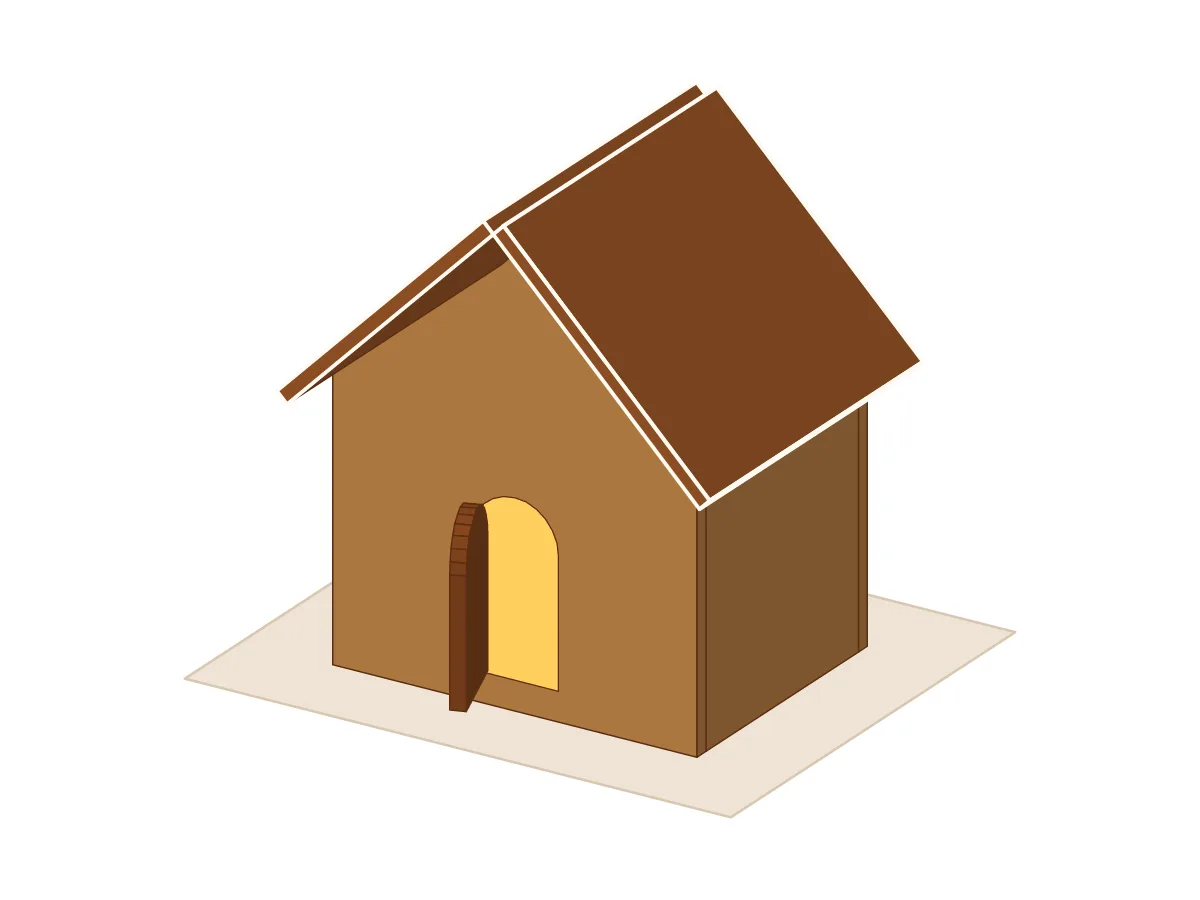 Easy gingerbread houseA small house with five patterns to cut and no chimney.
 Gingerbread man templateCookie sizes from 3 to 6 inches or a full page, blank or decorated.